进程的概念

引入
我们先不谈进程是什么东西?我么先用一个现实中的例子过渡到进程的概念!
假设你是一个大学的校长,在你的学校中有几万名学生!你应该如何才能管理好你的学生呢?在 C 语言的学习过程中我们都写过学生信息管理系统,可以从中借鉴管理的思路!
在学生信息管理系统中,每一名大学生都有自己的学号,姓名,性别,年龄等等属性,管理一个大学的学生,就是将每一个学生的基本信息组织起来,使用结构体封装起来!然后放到一个数据结构中,比如链表!之后呢我们想管理学生就只需要对这个链表进行增删改查啦!
- 假设你的学校新增了一名学生,首先你要做的就是将他的基本信息收集起来,然后插入到这个链表中来!
- 假设你要开除一名学生,你只需要将他的信息从链表中删除,再通知这个学生就行了!
- 假设你要为成绩第一的同学颁发奖学金,那么你就将链表中的学生信息按照总成绩排序,拿到成绩第一的学生的信息,然后通知他!
这个现实生活中的例子和 C 语言的学生信息管理系统思路都有一个共同点:那就是先描述被管理对象的信息,然后通过一定的形式将对象组织起来,统一管理。
这就是一个 先描述,再组织 的过程。
进程的概念
在学校的教材中,我们可能会看到这样的进程定义:一个已经加载到内存中的程序,叫做进程;或者正在运行的程序叫做进程。
我们先不看这些,我们按照刚刚讲过的思路来理解进程:在我们的电脑上是不是可以运行很多个程序,那么是不是就有很多个进程!既然有这么多的进程,那么操作系统要如何管理这些进程呢?
答案就是先描述再组织。
-
先描述:任何一个进程,在加载到内存的,形成真正的进程时,操作系统要创建描述进程的结构体对象。我们将这个结构体对象称为:进程控制块(PCB,process control block)。
这个描述进程的结构体对象是进程属性的集合,包含:- 进程编号。
- 进程状态。
- 进程的优先级。
等等。类比生活中的例子,操作系统对进程的管理本质上就是对描述进程的 PCB 做管理。
-
后组织:操作系统需要管理很多进程,在每个进程的结构体对象中,可以通过在 PCB 中添加
PCB*这样的指针信息,将许许多多的进程组织起来!
因此我们能得出一个结论,进程由两部分组成:
- 描述进程相关属性的的结构体对象,即 PCB。
- 该进程的代码和数据。
查看进程的相关属性
上面讲解的是所有操作系统的共同逻辑。也就是说在不同的操作系统中 PCB 有着不同的定义。在 linux 操作系统中,描述进程属性的结构体叫做:task_struct。
我们来简单看看 task_struct 中有哪些属性吧:
- 标示符: 描述本进程的唯一标示符,用来区别其他进程。
- 状态: 任务状态,退出代码,退出信号等。
- 优先级: 相对于其他进程的优先级。
- 程序计数器: 程序中即将被执行的下一条指令的地址。
- 内存指针: 包括程序代码和进程相关数据的指针,还有和其他进程共享的内存块的指针
- 上下文数据: 进程执行时处理器的寄存器中的数据[休学例子,要加图CPU,寄存器]。
- I/O状态信息: 包括显示的I/O请求,分配给进程的I/O设备和被进程使用的文件列表。
- 记账信息: 可能包括处理器时间总和,使用的时钟数总和,时间限制,记账号等。
当然,linux 内核源码中的 task_struct 肯定不止这么一点东西!有兴趣你可以下载 Linux 内核源码来看看:➡️linux 内核源码下载
如果你不想下载,在文章的最后,我也会附上 linux 2.6 版本的 task_struct。
那么我们应该如何使用命令查看一些进程的相关属性呢?
ps axj
-
ps axj:这个命令可以列出所有进程的部分属性。

横线的部分就是进程的属性名称啦!如果你要查看指定进程的部分属性,可以通过管道和
grep命令过滤一下。比如,我们写了这样的一个代码:
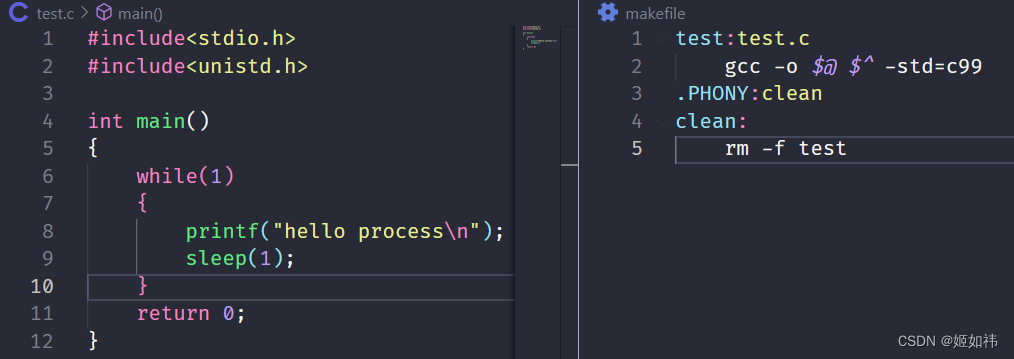
make生成可执行文件,./test运行之后,我们写的程序就变成了一个进程啦!
查看指定进程的相关属性:ps axj | head -1 && ps axj | grep testps axj显示所有进程,ps axj | head -1就是提取出来进程属性的名称。&&表示执行完前面的命令紧接着执行后面的命令。ps axj | grep test:过滤出来名为test的进程。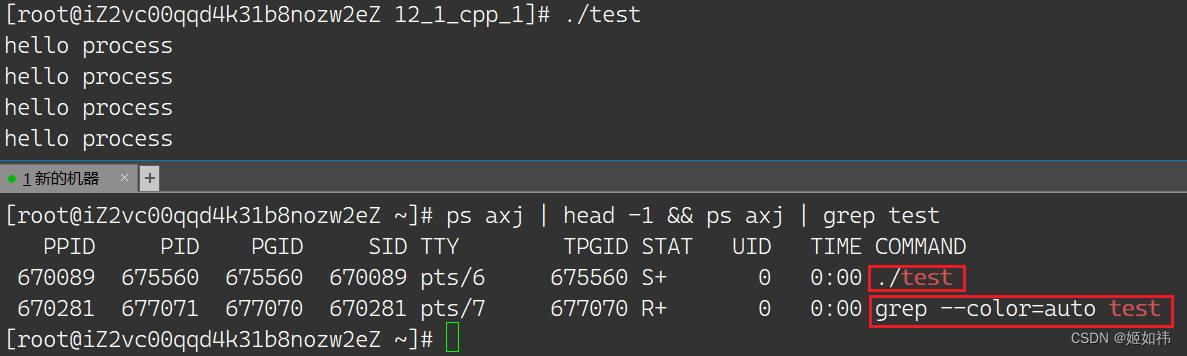
我们看到不仅有test进程,还有一个grep --color=auto test这是因为我们在使用grep命令过滤test的时候,grep进程也是携带了test这个过滤关键字的!自然就会被打印出来了!为什么 grep 也是进程呢?这个后面会讲的!
那如果我们看这个
grep不顺眼,不想看见他怎么办呢?很简单只需要加上-v选项反向匹配就行啦!ps axj | head -1 && ps axj | grep test | gerp -v grep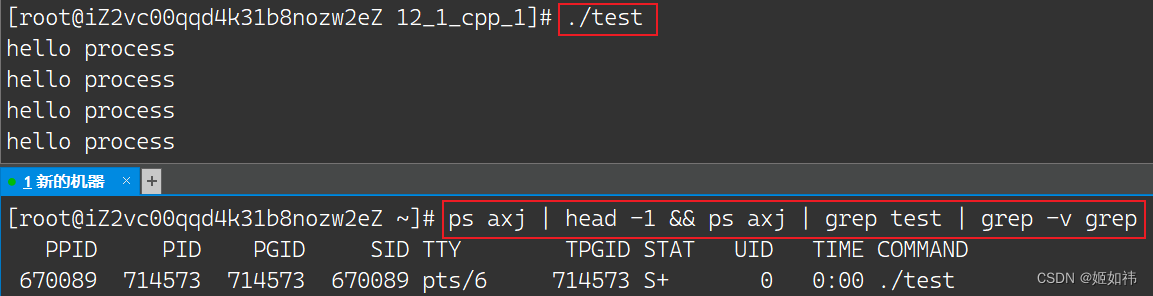
我们也是看到了一些进程的属性:
- PPID:父进程的编号。
- PID:当前进程的编号
- STAT:进程的状态。
这些以后都会讲,现在知道怎么查看进程的属性就行了!
ps axj 命令的本质
在进程的属性中,有一个属性可以知道当前进程可执行文件的名称(等会儿就会提到)。在 linux 中 task_struct 是由双链表组织起来的。因此 ps axj 命令的本质就是遍历双链表,根据进程的可执行文件名称,找到这个进程的 task_struct 打印进程的部分属性信息!
proc 目录
-
除了上面的这种方法,还可以:
ls /proc。这个文件中有所有进程的信息,这个文件中有以进程的 PID 命名的目录,这个目录里面就是进程的相关属性信息啦!/proc目录是实时更新的,进程没了,就不会在这个目录中出现了。我们运行刚刚写的程序:
./test,然后查看这个进程的 PID:ps axj | head -1 && ps axj | grep test | gerp -v grep。
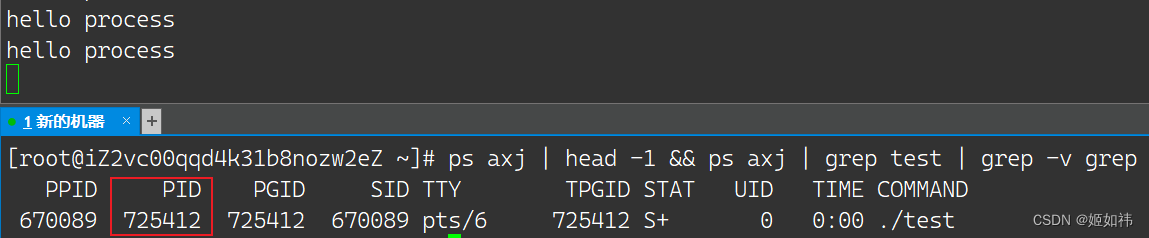
可以看到这个进程的PID是 725412。当然你的肯定和我不一样哈!然后我们进到这个目录看看看有木有一个叫做 725412 的目录!
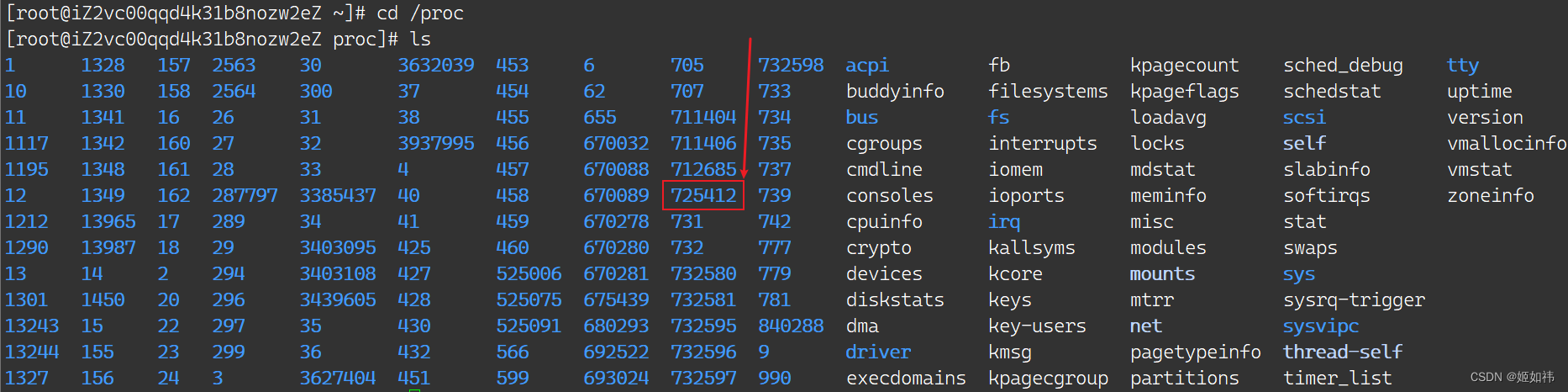
查看这个目录的内容:cd 725412; ls -al这里的分好和刚才的&&是一个意思,表示执行完前一个命令,接着执行下一个。
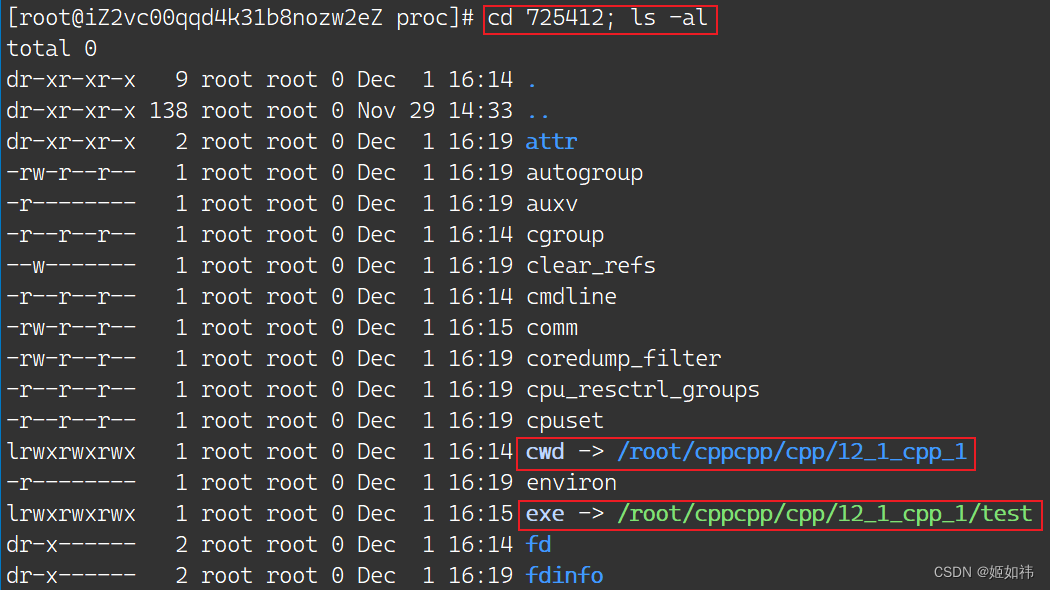
我们看到有很多进程的属性呢!这里我想简单提一下cwd和exe。-
cwd:可以看到他指向的是可执行文件的所在路径!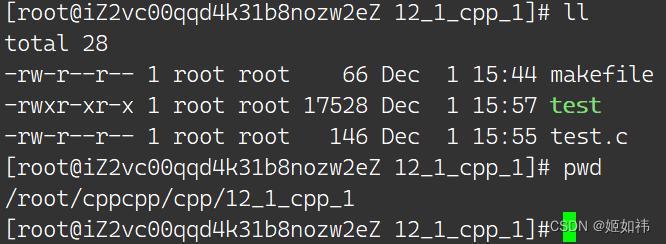
如果你想验证只需要将生成的可执行文件用mv命令移动到其他的位置就行啦!在这里我想提一下在 C 语言我们使用打开文件的函数
fopen,我们这样使用fopen的时候:fopen("./test.txt", "w");我们知道如果当前路径下不存在
test.txt就会自动创建,那他怎么知道当前路径是什么,就是因为进程中有cwd属性,能够找到当前路径。也就是说这个路径中的./会被替换为cwd/test.txt。 -
exe:这个简单,就是可执行文件嘛!
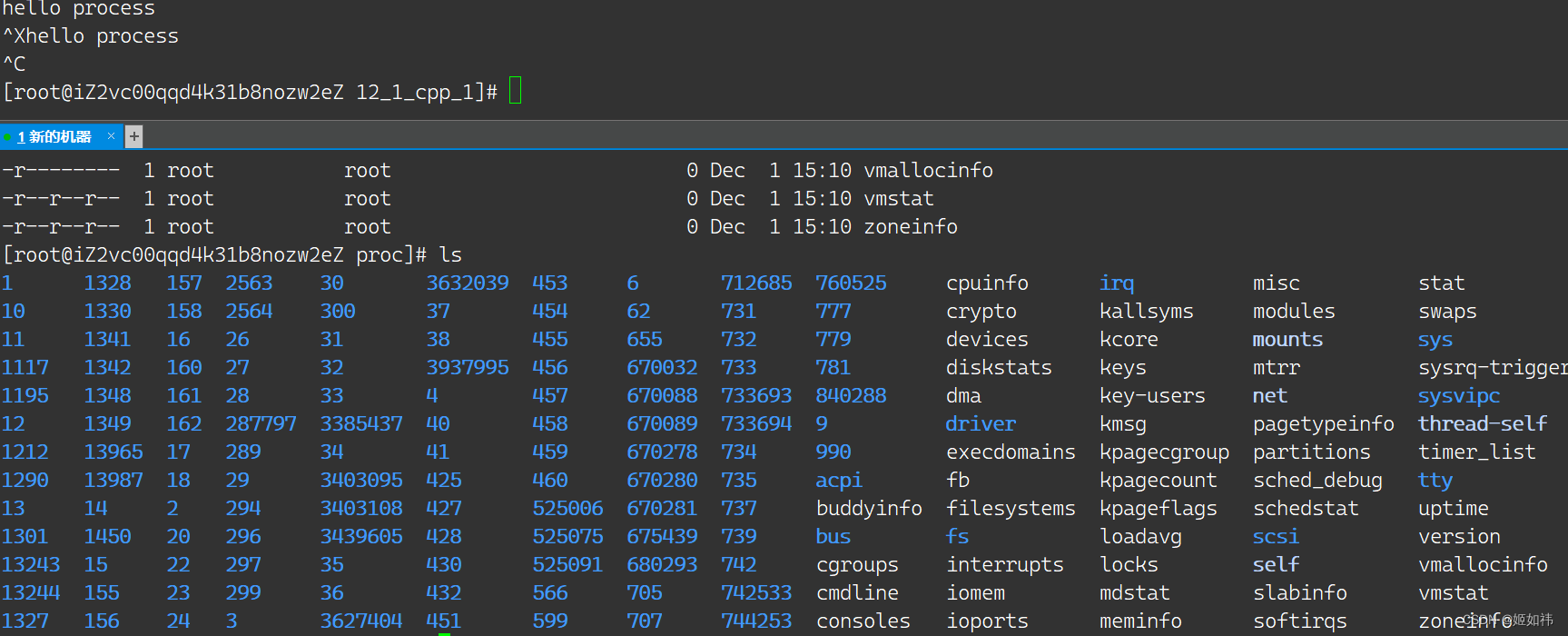
可以看到,当我们
ctrl + c结束掉进程的时候,我们在/proc目录下就找不到刚才存在的名为 725412 的目录了!
-
系统调用
还有一些系统调用也能获取进程的属性,这里我们就先学习两个:
getpid():获取调用该函数的进程的PID。getppid():获取调用该函数的进程的父进程的PID。也就是调用该函数的进程的PPID。
#include<stdio.h>
#include<unistd.h>int main()
{while(1){printf("I am a process, pid: %d, ppid: %d\n", getpid(), getppid());sleep(1);}return 0;
}
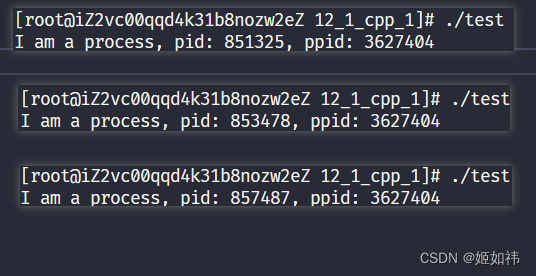
可以看到,我们顺利获取了我们写的进程的 pid, ppid,上图中,运行了三次。我们发现我们写的这个进程的 pid 一直在变化,ppid 却没有,这是为啥呢?
我们直接来看看 pid 为 3627404 的进程是啥?
ps axj | head -1 && ps axj

这不就是 bash 进程嘛!
我们看到还有两个命令形成的进程:ps axj,grep。这俩进程的 PPID 就是 bash 进程!这能说明所有的命令都是 bash 的子进程嘛?这里回答不了!等我们以后再讲。
我们重新登录 xshell,bash 进程的 pid 就会改变。因此我们登录 xshell 操作系统就会为我们创建命令行解释器(就是我们输命令,能够处理命令的那个进程)的进程,即 bash 进程。
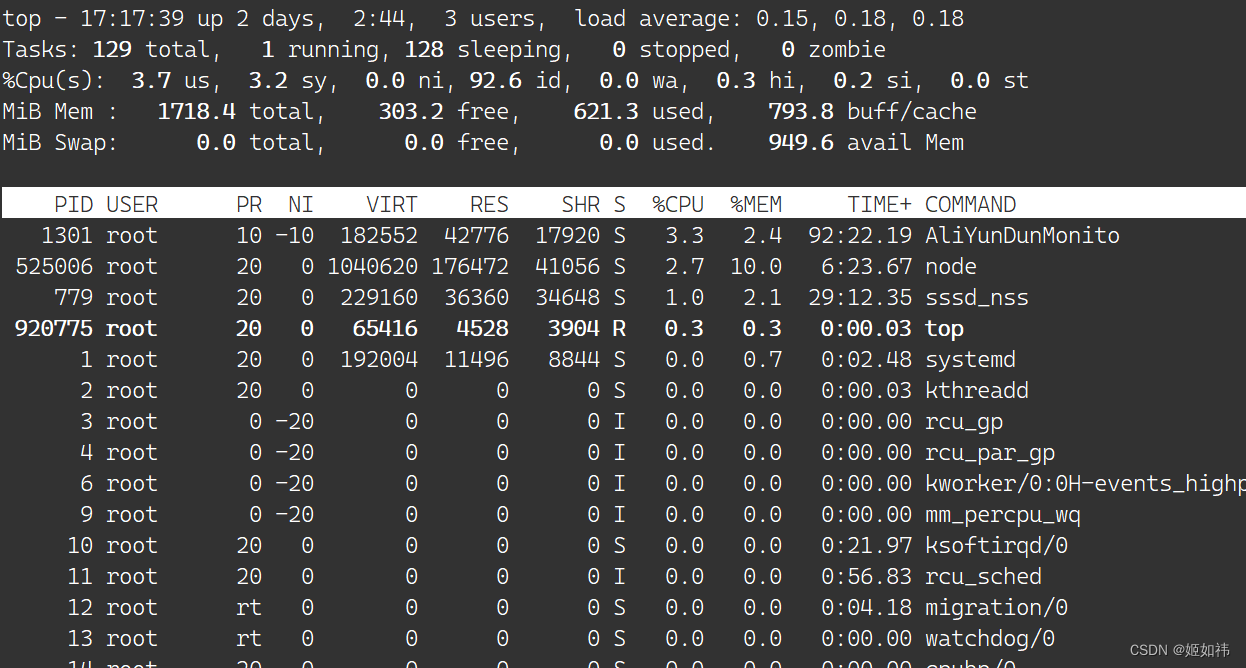
top 命令
这个命令也能查看进程,就和 Windows 的任务管理器有点相似。
linux 内核 task_struct 一览
struct task_struct {volatile long state;	/* -1 unrunnable, 0 runnable, >0 stopped */void *stack;atomic_t usage;unsigned int flags;	/* per process flags, defined below */unsigned int ptrace;int lock_depth;		/* BKL lock depth */#ifdef CONFIG_SMP
#ifdef __ARCH_WANT_UNLOCKED_CTXSWint oncpu;
#endif
#endifint prio, static_prio, normal_prio;unsigned int rt_priority;const struct sched_class *sched_class;struct sched_entity se;struct sched_rt_entity rt;#ifdef CONFIG_PREEMPT_NOTIFIERS/* list of struct preempt_notifier: */struct hlist_head preempt_notifiers;
#endif/** fpu_counter contains the number of consecutive context switches* that the FPU is used. If this is over a threshold, the lazy fpu* saving becomes unlazy to save the trap. This is an unsigned char* so that after 256 times the counter wraps and the behavior turns* lazy again; this to deal with bursty apps that only use FPU for* a short time*/unsigned char fpu_counter;
#ifdef CONFIG_BLK_DEV_IO_TRACEunsigned int btrace_seq;
#endifunsigned int policy;cpumask_t cpus_allowed;#ifdef CONFIG_TREE_PREEMPT_RCUint rcu_read_lock_nesting;char rcu_read_unlock_special;struct rcu_node *rcu_blocked_node;struct list_head rcu_node_entry;
#endif /* #ifdef CONFIG_TREE_PREEMPT_RCU */#if defined(CONFIG_SCHEDSTATS) || defined(CONFIG_TASK_DELAY_ACCT)struct sched_info sched_info;
#endifstruct list_head tasks;struct plist_node pushable_tasks;struct mm_struct *mm, *active_mm;
#if defined(SPLIT_RSS_COUNTING)struct task_rss_stat	rss_stat;
#endif
/* task state */int exit_state;int exit_code, exit_signal;int pdeath_signal;  /*  The signal sent when the parent dies  *//* ??? */unsigned int personality;unsigned did_exec:1;unsigned in_execve:1;	/* Tell the LSMs that the process is doing an* execve */unsigned in_iowait:1;/* Revert to default priority/policy when forking */unsigned sched_reset_on_fork:1;pid_t pid;pid_t tgid;#ifdef CONFIG_CC_STACKPROTECTOR/* Canary value for the -fstack-protector gcc feature */unsigned long stack_canary;
#endif/* * pointers to (original) parent process, youngest child, younger sibling,* older sibling, respectively.  (p->father can be replaced with * p->real_parent->pid)*/struct task_struct *real_parent; /* real parent process */struct task_struct *parent; /* recipient of SIGCHLD, wait4() reports *//** children/sibling forms the list of my natural children*/struct list_head children;	/* list of my children */struct list_head sibling;	/* linkage in my parent's children list */struct task_struct *group_leader;	/* threadgroup leader *//** ptraced is the list of tasks this task is using ptrace on.* This includes both natural children and PTRACE_ATTACH targets.* p->ptrace_entry is p's link on the p->parent->ptraced list.*/struct list_head ptraced;struct list_head ptrace_entry;/* PID/PID hash table linkage. */struct pid_link pids[PIDTYPE_MAX];struct list_head thread_group;struct completion *vfork_done;		/* for vfork() */int __user *set_child_tid;		/* CLONE_CHILD_SETTID */int __user *clear_child_tid;		/* CLONE_CHILD_CLEARTID */cputime_t utime, stime, utimescaled, stimescaled;cputime_t gtime;
#ifndef CONFIG_VIRT_CPU_ACCOUNTINGcputime_t prev_utime, prev_stime;
#endifunsigned long nvcsw, nivcsw; /* context switch counts */struct timespec start_time; 		/* monotonic time */struct timespec real_start_time;	/* boot based time */
/* mm fault and swap info: this can arguably be seen as either mm-specific or thread-specific */unsigned long min_flt, maj_flt;struct task_cputime cputime_expires;struct list_head cpu_timers[3];/* process credentials */const struct cred *real_cred;	/* objective and real subjective task* credentials (COW) */const struct cred *cred;	/* effective (overridable) subjective task* credentials (COW) */struct mutex cred_guard_mutex;	/* guard against foreign influences on* credential calculations* (notably. ptrace) */struct cred *replacement_session_keyring; /* for KEYCTL_SESSION_TO_PARENT */char comm[TASK_COMM_LEN]; /* executable name excluding path- access with [gs]et_task_comm (which lockit with task_lock())- initialized normally by setup_new_exec */
/* file system info */int link_count, total_link_count;
#ifdef CONFIG_SYSVIPC
/* ipc stuff */struct sysv_sem sysvsem;
#endif
#ifdef CONFIG_DETECT_HUNG_TASK
/* hung task detection */unsigned long last_switch_count;
#endif
/* CPU-specific state of this task */struct thread_struct thread;
/* filesystem information */struct fs_struct *fs;
/* open file information */struct files_struct *files;
/* namespaces */struct nsproxy *nsproxy;
/* signal handlers */struct signal_struct *signal;struct sighand_struct *sighand;sigset_t blocked, real_blocked;sigset_t saved_sigmask;	/* restored if set_restore_sigmask() was used */struct sigpending pending;unsigned long sas_ss_sp;size_t sas_ss_size;int (*notifier)(void *priv);void *notifier_data;sigset_t *notifier_mask;struct audit_context *audit_context;
#ifdef CONFIG_AUDITSYSCALLuid_t loginuid;unsigned int sessionid;
#endifseccomp_t seccomp;/* Thread group tracking */u32 parent_exec_id;u32 self_exec_id;
/* Protection of (de-)allocation: mm, files, fs, tty, keyrings, mems_allowed,* mempolicy */spinlock_t alloc_lock;#ifdef CONFIG_GENERIC_HARDIRQS/* IRQ handler threads */struct irqaction *irqaction;
#endif/* Protection of the PI data structures: */raw_spinlock_t pi_lock;#ifdef CONFIG_RT_MUTEXES/* PI waiters blocked on a rt_mutex held by this task */struct plist_head pi_waiters;/* Deadlock detection and priority inheritance handling */struct rt_mutex_waiter *pi_blocked_on;
#endif#ifdef CONFIG_DEBUG_MUTEXES/* mutex deadlock detection */struct mutex_waiter *blocked_on;
#endif
#ifdef CONFIG_TRACE_IRQFLAGSunsigned int irq_events;unsigned long hardirq_enable_ip;unsigned long hardirq_disable_ip;unsigned int hardirq_enable_event;unsigned int hardirq_disable_event;int hardirqs_enabled;int hardirq_context;unsigned long softirq_disable_ip;unsigned long softirq_enable_ip;unsigned int softirq_disable_event;unsigned int softirq_enable_event;int softirqs_enabled;int softirq_context;
#endif
#ifdef CONFIG_LOCKDEP
# define MAX_LOCK_DEPTH 48ULu64 curr_chain_key;int lockdep_depth;unsigned int lockdep_recursion;struct held_lock held_locks[MAX_LOCK_DEPTH];gfp_t lockdep_reclaim_gfp;
#endif/* journalling filesystem info */void *journal_info;/* stacked block device info */struct bio_list *bio_list;/* VM state */struct reclaim_state *reclaim_state;struct backing_dev_info *backing_dev_info;struct io_context *io_context;unsigned long ptrace_message;siginfo_t *last_siginfo; /* For ptrace use.  */struct task_io_accounting ioac;
#if defined(CONFIG_TASK_XACCT)u64 acct_rss_mem1;	/* accumulated rss usage */u64 acct_vm_mem1;	/* accumulated virtual memory usage */cputime_t acct_timexpd;	/* stime + utime since last update */
#endif
#ifdef CONFIG_CPUSETSnodemask_t mems_allowed;	/* Protected by alloc_lock */int mems_allowed_change_disable;int cpuset_mem_spread_rotor;int cpuset_slab_spread_rotor;
#endif
#ifdef CONFIG_CGROUPS/* Control Group info protected by css_set_lock */struct css_set *cgroups;/* cg_list protected by css_set_lock and tsk->alloc_lock */struct list_head cg_list;
#endif
#ifdef CONFIG_FUTEXstruct robust_list_head __user *robust_list;
#ifdef CONFIG_COMPATstruct compat_robust_list_head __user *compat_robust_list;
#endifstruct list_head pi_state_list;struct futex_pi_state *pi_state_cache;
#endif
#ifdef CONFIG_PERF_EVENTSstruct perf_event_context *perf_event_ctxp;struct mutex perf_event_mutex;struct list_head perf_event_list;
#endif
#ifdef CONFIG_NUMAstruct mempolicy *mempolicy;	/* Protected by alloc_lock */short il_next;
#endifatomic_t fs_excl;	/* holding fs exclusive resources */struct rcu_head rcu;/** cache last used pipe for splice*/struct pipe_inode_info *splice_pipe;
#ifdef	CONFIG_TASK_DELAY_ACCTstruct task_delay_info *delays;
#endif
#ifdef CONFIG_FAULT_INJECTIONint make_it_fail;
#endifstruct prop_local_single dirties;
#ifdef CONFIG_LATENCYTOPint latency_record_count;struct latency_record latency_record[LT_SAVECOUNT];
#endif/** time slack values; these are used to round up poll() and* select() etc timeout values. These are in nanoseconds.*/unsigned long timer_slack_ns;unsigned long default_timer_slack_ns;struct list_head	*scm_work_list;
#ifdef CONFIG_FUNCTION_GRAPH_TRACER/* Index of current stored address in ret_stack */int curr_ret_stack;/* Stack of return addresses for return function tracing */struct ftrace_ret_stack	*ret_stack;/* time stamp for last schedule */unsigned long long ftrace_timestamp;/** Number of functions that haven't been traced* because of depth overrun.*/atomic_t trace_overrun;/* Pause for the tracing */atomic_t tracing_graph_pause;
#endif
#ifdef CONFIG_TRACING/* state flags for use by tracers */unsigned long trace;/* bitmask of trace recursion */unsigned long trace_recursion;
#endif /* CONFIG_TRACING */
#ifdef CONFIG_CGROUP_MEM_RES_CTLR /* memcg uses this to do batch job */struct memcg_batch_info {int do_batch;	/* incremented when batch uncharge started */struct mem_cgroup *memcg; /* target memcg of uncharge */unsigned long bytes; 		/* uncharged usage */unsigned long memsw_bytes; /* uncharged mem+swap usage */} memcg_batch;
#endif
};
总结
- 管理 = 先描述,再组织
- 进程 = PCB + 数据 + 代码
- 查看进程属性
- ps axj
- /proc
- 系统调用
- getpid()
- getppid()
- top