【Redis】Jedis、SpringDataRedis与Template实战指南

深入解析Redis Java客户端:Jedis、SpringDataRedis与Template实战指南
🔍 一、核心组件关系与定位
-
Jedis
Redis官方推荐的Java客户端,提供原生API封装和底层命令操作。作为最基础的客户端,它直接与Redis服务通信,但需要手动管理连接池和线程安全(需配合连接池使用)。 -
SpringDataRedis
基于Jedis/Lettuce的高级抽象层,提供自动连接池管理、序列化集成、事务支持等特性。最大优势是与Spring生态无缝集成,支持声明式缓存(如@Cacheable)和响应式编程。 -
RedisTemplate与StringRedisTemplate
- RedisTemplate:默认使用JDK序列化,支持存储任意Java对象(需实现
Serializable接口),但Redis中数据为二进制格式,可读性差。 - StringRedisTemplate:继承自
RedisTemplate但专为字符串设计,使用StringRedisSerializer序列化,数据在Redis中为明文。两者数据不互通。
- RedisTemplate:默认使用JDK序列化,支持存储任意Java对象(需实现
💡 关键区别:
// RedisTemplate存储对象(JDK序列化)
redisTemplate.opsForValue().set("user:1", new User());
// StringRedisTemplate存储字符串(明文)
stringRedisTemplate.opsForValue().set("token", "abc123");
⚙️ 二、序列化机制深度解析
| 序列化器 | 特点 | 适用场景 |
|---|---|---|
JdkSerializationRedisSerializer | 生成二进制数据,可读性差;需实现Serializable接口 | 存储复杂对象(如DTO、Entity) |
StringRedisSerializer | 字符串UTF-8编码,Redis中明文存储 | 字符串、JSON文本、Key定义 |
Jackson2JsonRedisSerializer | 生成JSON文本,可读性好;需配置类型信息 | 跨语言兼容场景 |
最佳实践:
通过自定义配置修改默认序列化策略(避免JDK序列化的可读性问题):
@Configuration
public class RedisConfig {@Beanpublic RedisTemplate<String, Object> redisTemplate(RedisConnectionFactory factory) {RedisTemplate<String, Object> template = new RedisTemplate<>();template.setConnectionFactory(factory);template.setKeySerializer(RedisSerializer.string());template.setValueSerializer(RedisSerializer.json()); // 使用JSON序列化return template;}
}
⚡ 三、性能关键:连接池优化
Jedis本身线程不安全,必须通过连接池管理。参数配置直接影响性能:
JedisPoolConfig config = new JedisPoolConfig();
config.setMaxTotal(50);       // 最大连接数 = 预估QPS / 单连接QPS
config.setMaxIdle(20);        // 推荐maxIdle=maxTotal避免扩容开销
config.setMinIdle(10);        // 防止突发流量
config.setTestOnBorrow(false); // 生产环境禁用borrow时检测
典型问题与解决方案:
- 连接耗尽异常:调整
maxTotal(不超过Redis服务端最大连接数) - 首次访问延迟:启动时预热连接(创建minIdle数量的连接):
List<Jedis> minIdleList = new ArrayList<>(minIdle);
for (int i=0; i<minIdle; i++) minIdleList.add(pool.getResource());
minIdleList.forEach(jedis::close);
🧪 四、性能对比:Jedis vs RedisTemplate
实测表明Jedis原生API性能优于RedisTemplate,原因包括:
- RedisTemplate有额外的序列化/反序列化开销
- Spring的抽象层增加了方法调用栈深度
- 连接池管理逻辑更复杂
⚠️ 性能敏感场景建议:
- 高频读写:使用Jedis连接池
- 需要Spring整合:用RedisTemplate + JSON序列化
- 纯字符串操作:StringRedisTemplate(无序列化损耗)
🛠 五、避坑指南:典型问题解决方案
-
NPE问题
redisTemplate.hasKey()返回Boolean类型,自动拆箱可能引发NPE:// 错误写法(自动拆箱) boolean exists = redisTemplate.hasKey("key"); // 正确写法 Boolean exists = redisTemplate.hasKey("key"); if(exists != null && exists) {...} -
数据互通问题
RedisTemplate与StringRedisTemplate数据不共享,同一服务必须统一客户端。 -
连接泄露
务必在finally块中关闭Jedis实例(连接池模式实际是归还连接):try (Jedis jedis = jedisPool.getResource()) { jedis.get("key"); } // 自动关闭
🚀 六、SpringBoot集成最佳实践
-
依赖配置
<dependency><groupId>org.springframework.boot</groupId><artifactId>spring-boot-starter-data-redis</artifactId> </dependency> -
YAML配置模板
spring:redis:host: 192.168.1.100password: pass123database: 0lettuce:pool:max-active: 8max-idle: 8min-idle: 0 -
API选择建议
操作类型 推荐客户端 示例方法 Key/Value StringRedisTemplate opsForValue().set() / get() Hash RedisTemplate+JSON opsForHash().put() / entries() 发布订阅 RedisTemplate convertAndSend() / getConnection().subscribe() 事务 SessionCallback execute(new SessionCallback<>(){…})
💎 总结:技术选型决策树
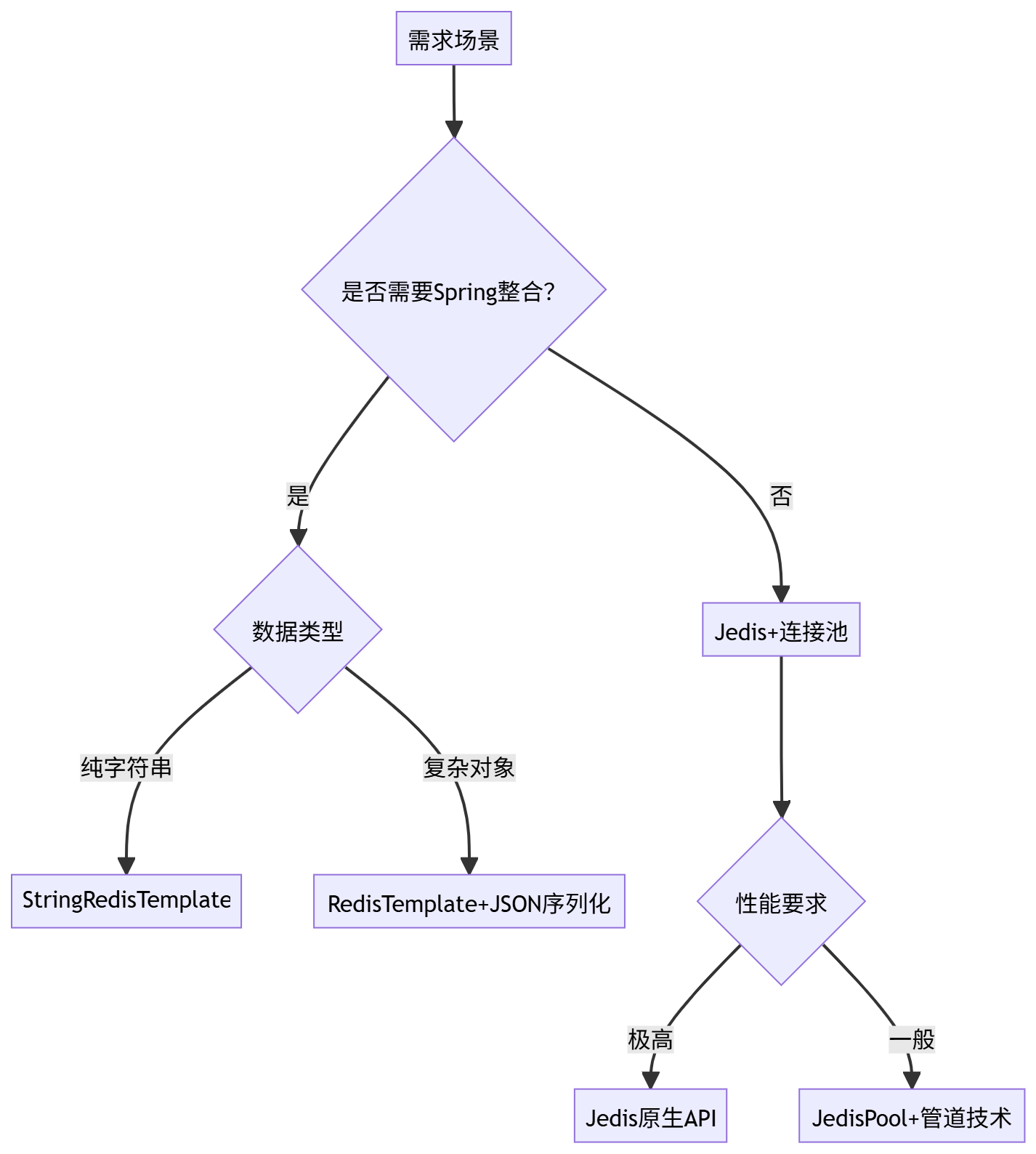
终极建议:
- 优先StringRedisTemplate:90%的Redis操作是字符串处理
- 慎用默认RedisTemplate:避免JDK序列化导致的数据不可读问题
- 高并发场景:用Jedis+Lua脚本优化原子性操作
通过合理选型、优化连接池和序列化策略,可显著提升Redis客户端性能和可维护性。最新实践可参考Spring Data Redis 3.x的响应式编程支持和自动配置改进。