js之继承

js之继承
- 1、原型 prototype 和 __proto__
- 2、原型链
- 3、继承
- 4、hasOwnProperty
1、原型 prototype 和 proto
- 每个对象都有一个__proto__属性,并且指向它的prototype原型对象
- 每个构造函数都有一个prototype原型对象
- prototype原型对象里的constructor指向构造函数本身
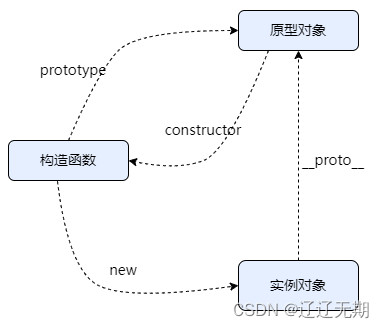
作用:实例对象的__proto__指向构造函数的prototype,从而实现继承。prototype对象相当于特定类型所有实例对象都可以访问的公共容器。
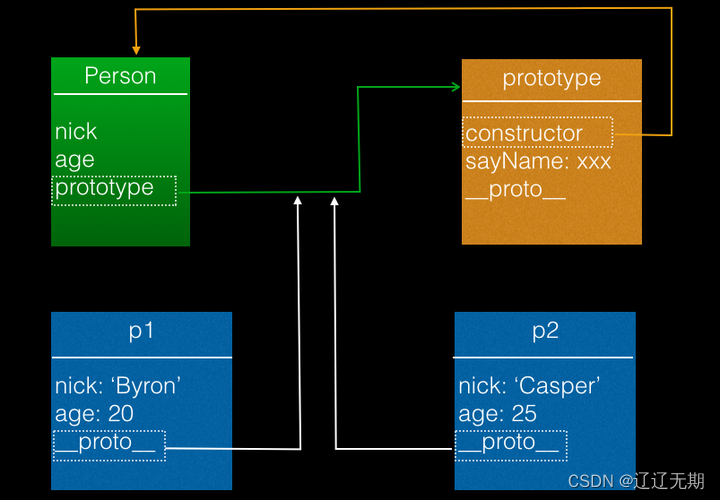
示例
function Person(nick, age){this.nick = nick;this.age = age;
}
Person.prototype.sayName = function(){console.log(this.nick);
}var p1 = new Person('Byron', 20);var p2 = new Person('Casper', 25);p1.sayName()  // Byronp2.sayName()  // Casperp1.__proto__ === Person.prototype       //truep2.__proto__ === Person.prototype   //truep1.__proto__ === p2.__proto__           //truePerson.prototype.constructor === Person  //true
2、原型链
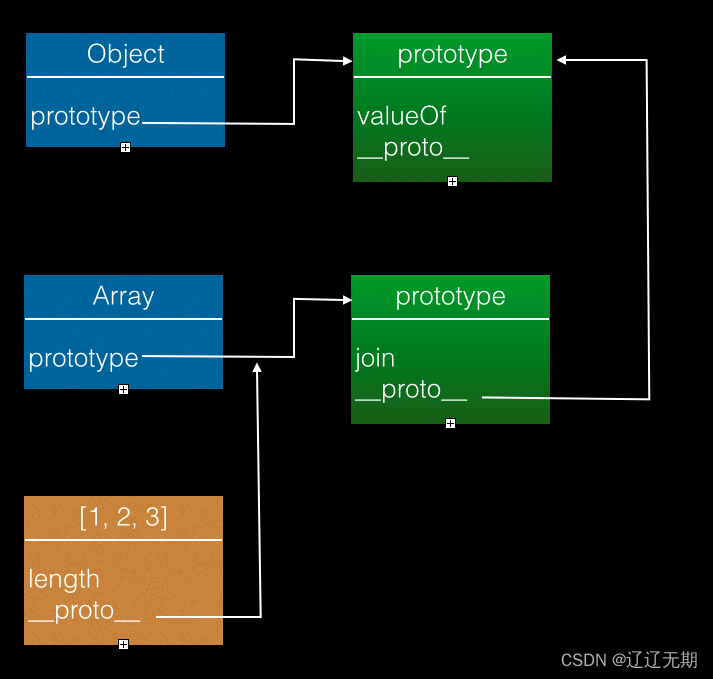
arr.__proto__ === Array.prototype
true
Array.prototype.__proto__ === Object.prototype
true
arr.__proto__.__proto__ === Object.prototype
true// 原型链的终点
Object.prototype.__proto__ === null
true
原型链如下:
arr ---> Array.prototype ---> Object.prototype ---> null
这就是传说中的原型链,层层向上查找,最后还没有就返回undefined
3、继承
继承是指一个对象直接使用另外一个对象的属性和方法
function Person (name, age) {this.name = namethis.age = age
}// 方法定义在构造函数的原型上
Person.prototype.getName = function () { console.log(this.name)}
定义Teacher构造函数
function Teacher (name, age, subject) {Person.call(this, name, age)this.subject = subject
}
原理
Teacher.prototype = Object.create(Person.prototype)Teacher.prototype.constructor
ƒ Person(name, age) {this.name = namethis.age = age
}---Teacher.prototype.constructor = Teacher
ƒ Teacher(name, age, subject) {Person.call(this, name, age)this.subject = subject
}
继承方法的最终方案
Teacher.prototype = Object.create(Person.prototype)
Teacher.prototype.constructor = Teacher
4、hasOwnProperty
在原型链上查询属性比较耗时,对性能有影响,试图访问不存在的属性时会遍历整个原型链。
遍历对象属性时,每个可枚举的属性都会被枚举出来。 要检查是否具有自己定义的属性,而不是原型链上的属性,必须使用hasOwnProperty方法。
hasOwnProperty 是 JavaScript 中唯一处理属性并且不会遍历原型链的方法。