二叉搜索树

目录
一、二叉搜索树的概念
二、二叉搜索树操作
1. 二叉搜索树的查找
2. 二叉搜索树的插入
2、二叉搜索树的删除
三、二叉搜索树的实现
四、二叉搜索树的应用
五、二叉搜索树的性能分析
一、二叉搜索树的概念
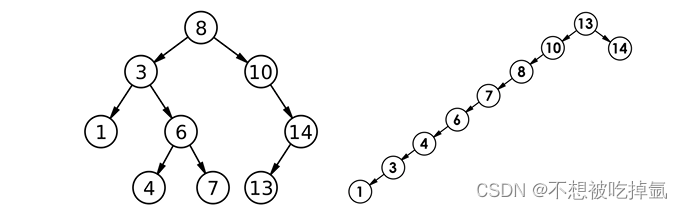
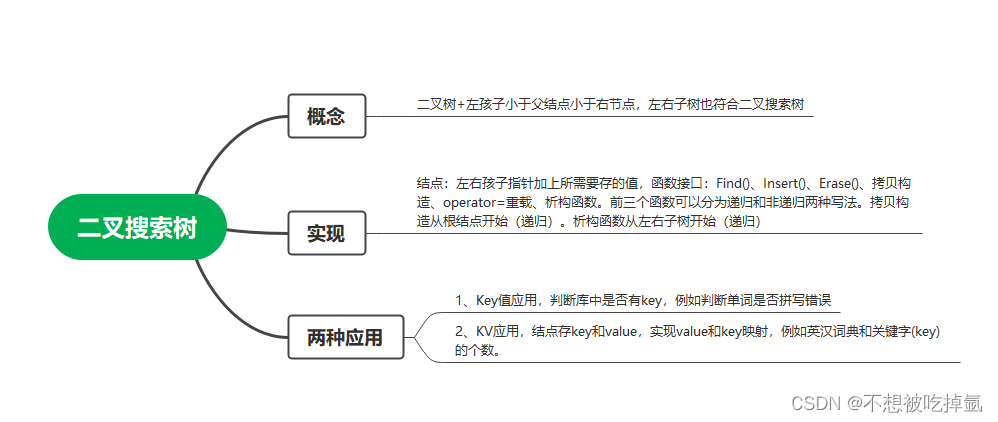
二叉搜索树又称二叉排序树,它或者是一棵空树,或者是具有以下性质的二叉树:
- 若它的左子树不为空,则左子树上所有节点的值都小于根节点的值
- 若它的右子树不为空,则右子树上所有节点的值都大于根节点的值
- 它的左右子树也分别为二叉搜索树
二、二叉搜索树操作
1. 二叉搜索树的查找
a、从根开始比较,查找,比根大则往右边走查找,比根小则往左边走查找。
b、最多查找高度次,走到到空,还没找到,这个值不存在。
2. 二叉搜索树的插入
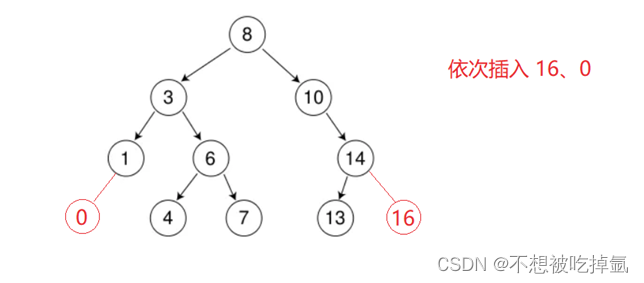
插入的具体过程如下:
a. 树为空,则直接新增节点,赋值给root指针
b. 树不空,按二叉搜索树性质查找插入位置,插入新节点
2、二叉搜索树的删除
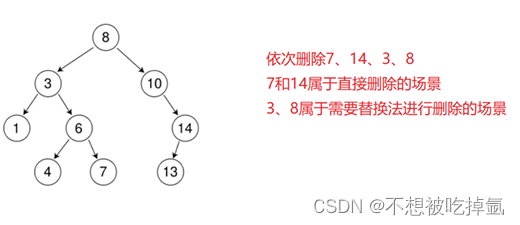
首先查找元素是否在二叉搜索树中,如果不存在,则返回, 否则要删除的结点可能分下面四种情 况:
- 要删除的结点无孩子结点
- 要删除的结点只有左孩子结点
- 要删除的结点只有右孩子结点
- 要删除的结点有左、右孩子结点
看起来有待删除节点有4中情况,实际情况1可以与情况2或者3合并起来,因此真正的删除过程 如下:
情况2:删除该结点且使被删除节点的双亲结点指向被删除节点的左孩子结点--直接删除
情况3:删除该结点且使被删除节点的双亲结点指向被删除结点的右孩子结点--直接删除
情况4:在它的右子树中寻找中序下的第一个结点(关键字最小),用它的值填补到被删除节点 中,再来处理该结点的删除问题--替换法删,或者在左子树中寻找中序下的最后一个结点,交换此结点与删除结点的值,将其转换为对左子树最右结点的删除(情况1或者2).
三、二叉搜索树的实现
删除和插入有递归和非递归两个版本
#pragma once
#include<iostream>
#include<algorithm>
using std::cout;
using std::endl;
using std::swap;
template<class K>
struct BSTreeNode
{BSTreeNode<K>* _left;BSTreeNode<K>* _right;K _key;BSTreeNode(const K& key):_left(nullptr),_right(nullptr),_key(key){}
};template<class K>
class BSTree
{typedef BSTreeNode<K> Node;
public:BSTree():_root(nullptr){}BSTree(const BSTree<K>& t){_root = Copy(t._root);}BSTree<K>& operator=(BSTree<K> t)//新型拷贝{swap(_root, t._root);return *this;}~BSTree(){Destory(_root);}bool Insert(const K& key){if (_root == nullptr){_root = new Node(key);return true;}//找到插入位置Node* parent = nullptr;Node* cur = _root;while (cur){if (cur->_key < key){parent = cur;cur = cur->_right;}else if (cur->_key > key){parent = cur;cur = cur->_left;}else{return false;}}//插入cur = new Node(key);if (parent->_key < key){parent->_right = cur;}else {parent->_left = cur;}return true;}bool Find(const K& key){Node* cur = _root;while (cur){if (cur->_key < key){cur = cur->_right;}else if (cur->_key > key){cur = cur->_left;}else{return true;}}return false;}bool Erase(const K& key){Node* parent = nullptr;Node* cur = _root;while (cur){if (cur->_key < key){parent = cur;cur = cur->_right;}else if (cur->_key > key){parent = cur;cur = cur->_left;}else {//找到了if (cur->_left == nullptr)//左孩子为空{if (cur == _root){_root = cur->_right;}else {if (parent->_right == cur){parent->_right = cur->_right;}else{parent->_left = cur->_right;}}}else if(cur->_right == nullptr){if (cur == _root){_root = cur->_left;}else{if (parent->_right == cur){parent->_right = cur->_left;}else{parent->_left = cur->_left;}}}else{Node* parent = cur;Node* leftMax = cur->_left;while (leftMax->_right){parent = leftMax;leftMax = leftMax->_right;}swap(cur->_key, leftMax->_key);//交换左子树最大值和cur的值。if (parent->_left == leftMax)//删除左子树最大值,此节点没有右子树{parent->_left = leftMax->_left;}else{parent->_right = leftMax->_left;}cur = leftMax;}delete cur;return true;}}return false;}void InOrder(){_InOrder(_root);cout << endl;}void _InOrder(Node* root){if (root == NULL){return;}_InOrder(root->_left);cout << root->_key << " ";_InOrder(root->_right);}bool EraseR2(const K& key){return _EraseR2(_root, key);}bool InsertR2(const K& key){return _InsertR2(_root, key);}
private:Node* Copy(Node* root){if (root == nullptr)return nullptr;Node* copyroot = new Node(root->_key);copyroot->_left = Copy(root->_left);copyroot->_right = Copy(root->_right);return copyroot;}void Destory(Node*& root){if (root == nullptr)return;Destory(root->_left);Destory(root->_right);delete root;root = nullptr;}//递归删除和插入bool _EraseR2(Node*& root, const K& key){if (root == nullptr)return false;if (root->_key < key){return _EraseR2(root->_right, key);}else if (root->_key > key){return _EraseR2(root->_left, key);}else{Node* del = root;//1.左为空//2.右为空  3.左右都不为空if (root->_left == nullptr){root = root->_right;}else if (root->_right == nullptr){root = root->_left;}else{Node* leftMax = root->_left;while (leftMax->_right){leftMax = leftMax->_right;}swap(root->_key, leftMax->_key);return _EraseR2(root->_left, key);}delete root;return true;}}bool _InsertR2(Node*& root,const K& key){if (root == nullptr){root = new Node(key);return true;}if (root->_key < key){return _InsertR2(root->_right, key);}else if (root->_key > key){return _InsertR2(root->_left, key);}else{return false;}}Node* _root;
};
四、二叉搜索树的应用
1、k模型:k模型即只有key作为关键字,结构中只需要存储Key即,关键字几位需要搜索到的值
比如:给一个单词word,判断该单词是否拼写正确,具体方式如下:
- 以词库中所有单词集合中的每个单词作为key,构建一颗二叉搜索树。
- 在二叉搜索树中检索该单词是否存在,存在则拼写正确,不存在则拼写错误。
2、KV模型:每一个关键字key,都有与之对应的值value,即<key,value>的键值对。该种方式在现实生活中非常常见:
- 比如英汉词典就是英文和中文的对应关系,通过英文可以快速找到与其对应的中文,英文单词与其对应的中文<word,chinese>就构成了一种键值对;
- 再比如统计单词次数,统计成功后,给定单词就可以快速找到其出现的次数,单词与其出现次数就是<word,count>就构成一种键值对。
 // 统计水果出现的次数
string arr[] = { "苹果", "西瓜", "苹果", "西瓜", "苹果", "苹果", "西瓜",
"苹果", "香蕉", "苹果", "香蕉" };BSTree<string, int> countTree;for (const auto& str : arr){// 先查找水果在不在搜索树中
// 1、不在,说明水果第一次出现,则插入<水果, 1>// 2、在,则查找到的节点中水果对应的次数++//BSTreeNode<string, int>* ret = countTree.Find(str);auto ret = countTree.Find(str);if (ret == NULL){countTree.Insert(str, 1);}else{ret->_value++;}}
五、二叉搜索树的性能分析
插入和删除操作都必须先查找,查找效率代表了二叉搜索树中各个操作的性能。
对有n个结点的二叉搜索树,若每个元素查找的概率相等,则二叉搜索树平均查找长度是结点在二 叉搜索树的深度的函数,即结点越深,则比较次数越多。
但对于同一个关键码集合,如果各关键码插入的次序不同,可能得到不同结构的二叉搜索树
最优情况下,二叉搜索树为完全二叉树(或者接近完全二叉树),其平均比较次数为:log_2 N 最差情况下,二叉搜索树退化为单支树(或者类似单支),其平均比较次数为:O(N)
问题:如果退化成单支树,二叉搜索树的性能就失去了。那能否进行改进,不论按照什么次序插 入关键码,二叉搜索树的性能都能达到最优?那么我们后续章节学习的AVL树和红黑树就可以上 场了。