Java_栈_队列

文章目录
- 一、栈(Stack)
- 1.概念
- 2.栈的使用
- 3.栈的模拟实现
- 1、定义接口
- 2、定义栈
- 3、成员
- 4、构造方法
- 5、判断空间是否满 full
- 6、入栈 push
- 7、出栈 pop
- 8、获取栈顶元素 peek
- 9、获取栈中有效元素个数 size
- 10、检测栈是否为空 empty
- 完整代码
- 4.练习
- 1、有效括号
- 2、逆波兰表达式求值
- 3、栈的压入,弹出序列
- 4、最小栈
- 5. 概念区分
- 二、队列
- 1.概念
- 2.队列的使用
- 3.模拟实现
- 1、成员
- 2、入队列 offer
- 3、出队列 poll
- 4、获取队头元素 peek
- 5、获取队列中有效元素个数 size
- 6、检查队列是否为空 isEmpty
- 完整代码
- 三、其他队列
- 1.循环队列
- 设计循环队列
- 2.双端队列
- 3.练习
一、栈(Stack)
1.概念
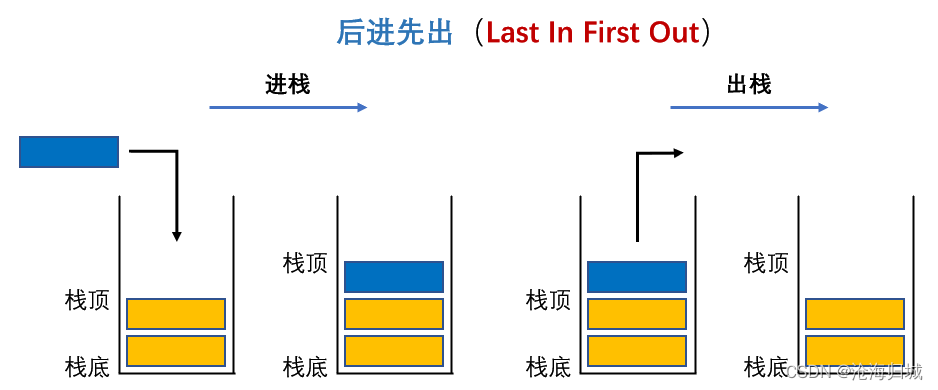
栈:一种特殊的线性表,其只允许在固定的一端进行插入和删除元素操作。进行数据插入和删除操作的一端称为栈顶,另一端称为栈底。栈中的数据元素遵守后进先出LIFO(Last In First Out)的原则。
压栈:栈的插入操作叫做进栈/压栈/入栈,入数据在栈顶。
出栈:栈的删除操作叫做出栈。出数据在栈顶。
2.栈的使用
| 方法 | 功能 |
|---|---|
| Stack() | 构造一个空的栈 |
| E push(E e) | 将e入栈 |
| E pop() | 将栈顶元素出栈 |
| E peek() | 获取栈顶元素 |
| int size() | 获取栈中有效元素个数 |
| boolean empty() | 检查栈是否为空 |
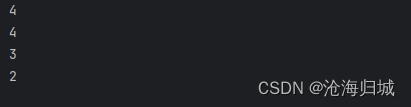
public static void main(String[] args) {Stack<Integer> s =new Stack<>();s.push(1);s.push(2);s.push(3);s.push(4);System.out.println(s.size());System.out.println(s.peek());s.pop();System.out.println(s.pop());if(s.empty()){System.out.println("栈空");}else{System.out.println(s.size());}}
3.栈的模拟实现
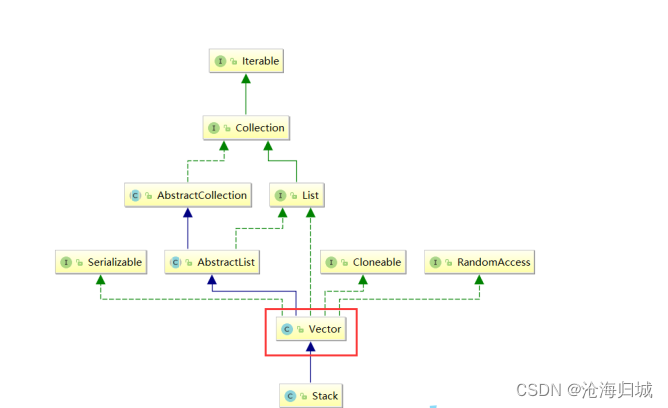
从上图中可以看到,Stack继承了Vector,Vector和ArrayList类似,都是动态的顺序表,不同的是Vector是线程安全的。
1、定义接口
public interface IStack {void push(int x);int pop();int peek();int size();boolean empty();//判断是否满boolean full();
}
2、定义栈
public class MyStack implements IStack{@Overridepublic void push(int x) {}@Overridepublic int pop() {return 0;}@Overridepublic int peek() {return 0;}@Overridepublic int size() {return 0;}@Overridepublic boolean empty() {return false;}@Overridepublic boolean full() {return false;}
}
3、成员
存储数据的数组:
private int usedSize;
有效数据的个数:
private int usedSize;
默认大小:
private static final int DEFAULT_CAPACITY = 10;
4、构造方法
public MyStack(){elem =new int[DEFAULT_CAPACITY];}
5、判断空间是否满 full
@Overridepublic boolean full() {if(usedSize ==elem.length){return true;}return false;}
6、入栈 push
@Overridepublic void push(int x) {if(full()){elem = Arrays.copyOf(elem,elem.length*2);}elem[usedSize++] =x;}
7、出栈 pop
public class EmptyException extends RuntimeException{public EmptyException(String msg){super(msg);}}
-------------------------------------@Overridepublic int pop() {if(empty()){//抛异常throw new EmptyException("栈空,出栈异常");}int old = elem[usedSize--];//如果是引用就需要置空return old;}
8、获取栈顶元素 peek
@Overridepublic int peek() {if(empty()){//抛异常throw new EmptyException("栈空");}return elem[usedSize-1];}
9、获取栈中有效元素个数 size
@Overridepublic int size() {return usedSize;}
10、检测栈是否为空 empty
@Overridepublic boolean empty() {return usedSize==0;}
完整代码
public class EmptyException extends RuntimeException{public EmptyException(String msg){super(msg);}}----------------------------
public interface IStack {void push(int x);int pop();int peek();int size();boolean empty();//判断是否满boolean full();
}----------------------------------
import java.util.Arrays;public class MyStack  implements IStack{private  int [] elem;private  int usedSize;private  static  final  int DEFAULT_CAPACITY = 10;public MyStack(){elem =new int[DEFAULT_CAPACITY];}@Overridepublic boolean full() {if(usedSize ==elem.length){return  true;}return false;}@Overridepublic void push(int x) {if(full()){elem = Arrays.copyOf(elem,elem.length*2);}elem[usedSize++] =x;}@Overridepublic int pop() {if(empty()){//抛异常throw new EmptyException("栈空,出栈异常");}int old = elem[usedSize--];return old;}@Overridepublic int peek() {if(empty()){//抛异常throw new EmptyException("栈空");}return elem[usedSize-1];}@Overridepublic int size() {return usedSize;}@Overridepublic boolean empty() {return  usedSize==0;}
}
4.练习
1、有效括号
有效括号
开一个栈,遇到左括号进栈,遇到右括号检查栈顶和遇到右括号是否匹配。
class Solution {public boolean isValid(String s) {Stack<Character> st = new Stack<>();for(int i = 0;i<s.length();i++){char c =s.charAt(i);if(c=='('||c=='{'||c=='['){st.push(c);}else{if(c==')'&&!st.empty()){if(st.peek()!='('){return false;}st.pop();}else if(c=='}'&&!st.empty()){if(st.peek()!='{'){return false;}st.pop();}else if(c==']'&&!st.empty()){if(st.peek()!='['){return false;}st.pop();}else {return false;}}}if(st.empty()){return true;}return  false;}
}
2、逆波兰表达式求值
逆波兰表达式
判断是操作数还是算符,如果是操作数转Int存在栈,不是就按算符进行运算。
class Solution {boolean isOperation(String s){if(s.equals("+")||s.equals("-")||s.equals("*")||s.equals("/")){return  true;}return false;}public int evalRPN(String[] tokens) {Stack<Integer > st = new Stack<>();for(int i = 0;i<tokens.length;i++){String s  =  tokens[i];if(isOperation(s)){int right  = 0;int left=0 ;if(st.size()>=2){right = st.pop();left = st.pop();}if(s.equals("+")){st.push(left+right);}else if(s.equals("-")){st.push(left-right);}else if(s.equals("*")){st.push(left*right);}else if(s.equals("/")){st.push(left/right);}}else{int temp = Integer.parseInt(s);st.push(temp);}}return st.peek();}
}
3、栈的压入,弹出序列
栈的压入,弹出序列
先创建一个栈模拟压入,循环检查是否可以出栈,如果符合就出栈,不符合继续压入,直到全部压入但不能出栈,即为不符合弹出序列。
import java.util.*;public class Solution {/*** 代码中的类名、方法名、参数名已经指定,请勿修改,直接返回方法规定的值即可*** @param pushV int整型一维数组* @param popV int整型一维数组* @return bool布尔型*/public boolean IsPopOrder (int[] pushV, int[] popV) {Stack<Integer> st = new Stack<>();int cur1= 0;int cur2 =0;int len = pushV.length;while(cur1<len||cur2<len){if(cur1<len){st.push(pushV[cur1]);}while(cur2<len){if(!st.empty()&&st.peek()==popV[cur2]){st.pop();cur2++;}else {if(cur1<len){break;}else{return false;}}}cur1++;}return st.empty();}
}
4、最小栈
最小栈
开两个栈,一个存最小值的栈,一个就是普通的栈。在入栈的时候,判断存最小值的栈是否为空,空就同时入这两个栈,不为空就要比较存最小值的栈上面的值和新入的值,如果比最小栈的值还小或等于就同时入两栈,否则只入普通栈。
class MinStack {private  Stack<Integer> stack;private  Stack<Integer> minStack;public MinStack() {stack =new Stack<>();minStack = new Stack<>();}public void push(int val) {stack.push(val);if(minStack.empty()){minStack.push(val);}else{if(minStack.peek()>=val){minStack.push(val);}}}public void pop() {if(minStack.peek().equals(stack.peek())){minStack.pop();}stack.pop();}public int top() {return  stack.peek();}public int getMin() {return minStack.peek();}
}
5. 概念区分
栈、虚拟机栈、栈帧有什么区别?
栈:数据结构
虚拟机栈:JVM划分的一款内存而已
栈帧:调用方法的时候会在虚拟机当中给这个方法开辟一块内存
二、队列
1.概念
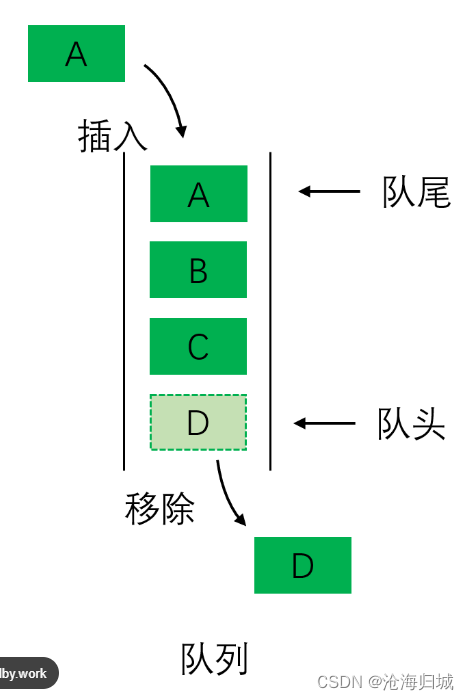
队列:只允许在一端进行插入数据操作,在另一端就进行删除数据操作的特殊线性表,队列具有先进先出FIFO(First In First Out)
入队列:进行插入操作的一端称为队尾(Tail/Rear)
出队列:进行删除操作的一端称为队头(Head/Front)
2.队列的使用
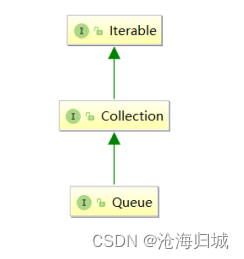
在Java中,Queue是个接口,底层是通过链表实现的。
| 方法 | 功能 |
|---|---|
| boolean offer(E e) | 入队列 |
| E poll() | 出队列 |
| peek() | 获取队头元素 |
| int size() | 获取队列中有效元素个数 |
| boolean isEmpty() | 检查队列是否为空 |
注意:Queue是个接口,在实例化时必须实例化LinkedList的对象,因为LinkedList实现了Queue接口。
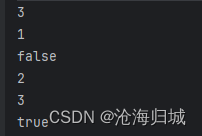
public static void main(String[] args) {Queue<Integer> queue = new LinkedList<>();queue.offer(1);queue.offer(2);queue.offer(3);System.out.println(queue.size());System.out.println(queue.peek());queue.poll();System.out.println(queue.isEmpty());System.out.println(queue.poll());System.out.println(queue.poll());System.out.println(queue.isEmpty());}
3.模拟实现
1、成员
双向链表节点
static class ListNode{public int val;public ListNode next;public ListNode prev;public ListNode(int val){this.val =val;}}
头尾引用
public ListNode head;public ListNode last;
节点个数
public int size;
2、入队列 offer
boolean offer(int val){ListNode node = new ListNode(val);if(head==null){head = node;last = node;}else{last.next = node;node.prev = last;last = node;}size++;return true;}
3、出队列 poll
public int poll(){if(head==null){return -1;}int ret = head.val;if(head.next==null){head =null;last = null;return ret;}head.next.prev = null;head = head.next;return ret;}
4、获取队头元素 peek
public int peek(){if(head==null){return -1;}return head.val;}
5、获取队列中有效元素个数 size
public int size(){return size;}
6、检查队列是否为空 isEmpty
public boolean isEmpty(){return size==0;}
完整代码
package queuedemo;import java.util.List;public class MyLinkQueue {static class ListNode{public int val;public ListNode next;public ListNode prev;public ListNode(int val){this.val =val;}}public ListNode head;public ListNode last;public int size;boolean offer(int val){ListNode node = new ListNode(val);if(head==null){head = node;last = node;}else{last.next = node;node.prev = last;last = node;}size++;return true;}public int poll(){if(head==null){return -1;}size--;int ret = head.val;if(head.next==null){head =null;last = null;return ret;}head.next.prev = null;head = head.next;return ret;}public int peek(){if(head==null){return -1;}return head.val;}public int size(){return size;}public boolean isEmpty(){return size==0;}}
三、其他队列
1.循环队列
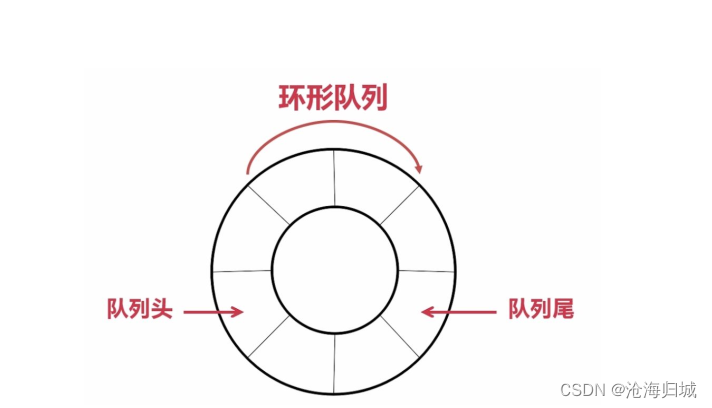
实际中我们有时还会使用一种队列叫循环队列。如操作系统课程讲解生产者消费者模型时可以就会使用循环队列。环形队列通常使用数组实现。
问题:
如何判断是空还是满?
解决空还是满有很多种方案:
1.使用usedSize进行记录
2.浪费一个空间来表示满
3.使用标记
如何从7下标来到0下标?
(队尾指针+1)%len
设计循环队列
设计循环队列
class MyCircularQueue {public int [] elem;int front = 0;int rear  = 0;public MyCircularQueue(int k) {elem = new int[k+1];}public boolean enQueue(int value) {if(isFull()){return  false; }elem[rear] = value;rear = (rear+1)%elem.length;return true;}public boolean deQueue() {if(isEmpty()){return false;}front = (front+1)%elem.length;return true;}public int Front() {if(isEmpty()){return-1;}return elem[front];}public int Rear() {if(isEmpty()){return -1;}int temp = (rear-1+elem.length)%elem.length;return  elem[temp];}public boolean isEmpty() {return  front==rear;}public boolean isFull() {return  (rear+1)%elem.length==front;}
}
2.双端队列
双端队列(deque)是指允许两端都可以进行入队和出队操作的队列,deque 是 “double ended queue” 的简称。那就说明元素可以从队头出队和入队,也可以从队尾出队和入队。
Deque是一个接口,使用时必须创建LinkedList的对象。
Deque<Integer> stack = new ArrayDeque<>();//双端队列的线性实现
Deque<Integer> queue = new LinkedList<>();//双端队列的链式实现
3.练习
队列实现栈
class MyStack {Queue<Integer> que1;Queue<Integer> que2;public MyStack() {que1 = new LinkedList<>();que2 = new LinkedList<>();}public void push(int x) {if(que1.isEmpty()&&que2.isEmpty()){que1.offer(x);}else{if(que1.isEmpty()){que2.offer(x);}else{que1.offer(x);}}}public int pop() {int size ;if(que1.isEmpty()){size = que2.size();for(int i = 0;i<size-1;i++){que1.offer(que2.poll());}return que2.poll();}else{size = que1.size();for(int i = 0;i<size-1;i++){que2.offer(que1.poll());}return que1.poll();}}public int top() {if(que1.isEmpty()){int size = que2.size();for(int i = 0;i<size-1;i++){que1.offer(que2.poll());}int ret =que2.poll();que1.offer(ret);return ret;}else{int size = que1.size();for(int i = 0;i<size-1;i++){que2.offer(que1.poll());}int ret =que1.poll();que2.offer(ret);return ret;}}public boolean empty() {return  que2.isEmpty()&&que1.isEmpty();}
}
栈实现队列
class MyQueue {Stack<Integer> stack1;Stack<Integer> stack2;public MyQueue() {stack1 = new Stack<>();//入队列stack2 = new Stack<>();//出列}public void push(int x) {stack1.push(x);}public int pop() {if(stack2.isEmpty()){while(!stack1.isEmpty()){stack2.push(stack1.pop());}}return  stack2.pop();}public int peek() {if(stack2.isEmpty()){while(!stack1.isEmpty()){stack2.push(stack1.pop());}}return  stack2.peek();}public boolean empty() {return stack2.isEmpty()&&stack1.isEmpty();}
}