【Linux】线程池

线程池:
一种线程使用模式。线程过多会带来调度开销,进而影响缓存局部性和整体性能。而线程池维护着多个线程,等待着监督管理者分配可并发执行的任务。这避免了在处理短时间任务时创建与销毁线程的代价。线程池不仅能够保证内核的充分利用,还能防止过分调度。可用线程数量应该取决于可用的并发处理器、处理器内核、内存、网络sockets等的数量。
线程池的应用场景
- 需要大量线程完成任务,且完成的时间比较短。
- 对性能要求苛刻的应用。
- 接收突发性的大量请求,但不至于使服务器因此产生大量线程的应用。
组成
线程池的本质是生产消费模型。既然是生产消费模型,也就需要一个队列来存放任务。
这个队列在多线程环境下属于公共资源,访问公共资源就需要加锁。所以一个线程池的组成就是:线程、任务队列、锁。

代码
LockGuard.hpp
这个是管理锁的类。
#pragma once#include <iostream>
#include <pthread.h>class Mutex
{
public:Mutex(pthread_mutex_t *lock_p = nullptr): lock_p_(lock_p){}void lock(){if(lock_p_) pthread_mutex_lock(lock_p_);}void unlock(){if(lock_p_) pthread_mutex_unlock(lock_p_);}~Mutex(){}
private:pthread_mutex_t *lock_p_;
};class LockGuard
{
public:LockGuard(pthread_mutex_t *mutex): mutex_(mutex){mutex_.lock(); }~LockGuard(){mutex_.unlock(); }private:Mutex mutex_;
};
Thread.hpp
这个是封装的线程类
#pragma once#include <iostream>
#include <string>
#include <cstring>
#include <cassert>
#include <functional>
#include <pthread.h>namespace ThreadNs
{typedef std::function<void *(void *)> func_t;const int num = 1024;class Thread{private:// 在类内创建线程,想让线程执行对应的方法,需要将方法设置成为staticstatic void *start_routine(void *args) // 类内成员,有缺省参数{Thread *_this = static_cast<Thread *>(args);return _this->callback();}public:Thread(){char namebuffer[num];snprintf(namebuffer, sizeof namebuffer, "thread-%d", threadnum++);name_ = namebuffer;}void start(func_t func, void *args = nullptr){func_ = func;args_ = args;int n = pthread_create(&tid_, nullptr, start_routine, this);assert(n == 0);                                            (void)n;}void join(){int n = pthread_join(tid_, nullptr);assert(n == 0);(void)n;}std::string threadname(){return name_;}~Thread(){}void *callback() { return func_(args_);}private:std::string name_;func_t func_;void *args_;pthread_t tid_;static int threadnum;};int Thread::threadnum = 1;
}
ThreadPool.hpp
线程池类
#pragma once#include "Thread.hpp"
#include "LockGuard.hpp"
#include <vector>
#include <queue>
#include <mutex>
#include <pthread.h>
#include <unistd.h>using namespace ThreadNs;const int gnum = 10;template <class T>
class ThreadPool;template <class T>
class ThreadData
{
public:ThreadPool<T> *threadpool;std::string name;public:ThreadData(ThreadPool<T> *tp, const std::string &n) : threadpool(tp), name(n){}
};template <class T>
class ThreadPool
{
private:static void *handlerTask(void *args){ThreadData<T> *td = (ThreadData<T> *)args;while (true){T t;{LockGuard lockguard(td->threadpool->mutex());while (td->threadpool->isQueueEmpty()){td->threadpool->threadWait();}t = td->threadpool->pop();}std::cout << td->name << " 获一取了个任务: " << t.toTaskString() << " 并处理完成,结果是:" << t() << std::endl;}delete td;return nullptr;}public:void lockQueue() { pthread_mutex_lock(&_mutex); }void unlockQueue() { pthread_mutex_unlock(&_mutex); }bool isQueueEmpty() { return _task_queue.empty(); }void threadWait() { pthread_cond_wait(&_cond, &_mutex); }T pop(){T t = _task_queue.front();_task_queue.pop();return t;}pthread_mutex_t *mutex(){return &_mutex;}public:ThreadPool(const int &num = gnum) : _num(num){pthread_mutex_init(&_mutex, nullptr);pthread_cond_init(&_cond, nullptr);for (int i = 0; i < _num; i++){_threads.push_back(new Thread());}}void run(){for (const auto &t : _threads){ThreadData<T> *td = new ThreadData<T>(this, t->threadname());t->start(handlerTask, td);std::cout << t->threadname() << " start ..." << std::endl;}}void push(const T &in){LockGuard lockguard(&_mutex);_task_queue.push(in);pthread_cond_signal(&_cond);}~ThreadPool(){pthread_mutex_destroy(&_mutex);pthread_cond_destroy(&_cond);for (const auto &t : _threads)delete t;}private:int _num;  //线程的数量std::vector<Thread *> _threads;std::queue<T> _task_queue;pthread_mutex_t _mutex;pthread_cond_t _cond;
};
Task.hpp
任务类
#pragma once#include <iostream>
#include <string>
#include <cstdio>
#include <functional>class Task
{using func_t = std::function<int(int,int,char)>;
public:Task(){}Task(int x, int y, char op, func_t func):_x(x), _y(y), _op(op), _callback(func){}std::string operator()(){int result = _callback(_x, _y, _op);char buffer[1024];snprintf(buffer, sizeof buffer, "%d %c %d = %d", _x, _op, _y, result);return buffer;}std::string toTaskString(){char buffer[1024];snprintf(buffer, sizeof buffer, "%d %c %d = ?", _x, _op, _y);return buffer;}
private:int _x;int _y;char _op;func_t _callback;
};int mymath(int x, int y, char op)
{int result = 0;switch (op){case '+':result = x + y;break;case '-':result = x - y;break;case '*':result = x * y;break;case '/':{if (y == 0){std::cerr << "div zero error!" << std::endl;result = -1;}elseresult = x / y;}break;case '%':{if (y == 0){std::cerr << "mod zero error!" << std::endl;result = -1;}elseresult = x % y;}break;default:break;}return result;
}
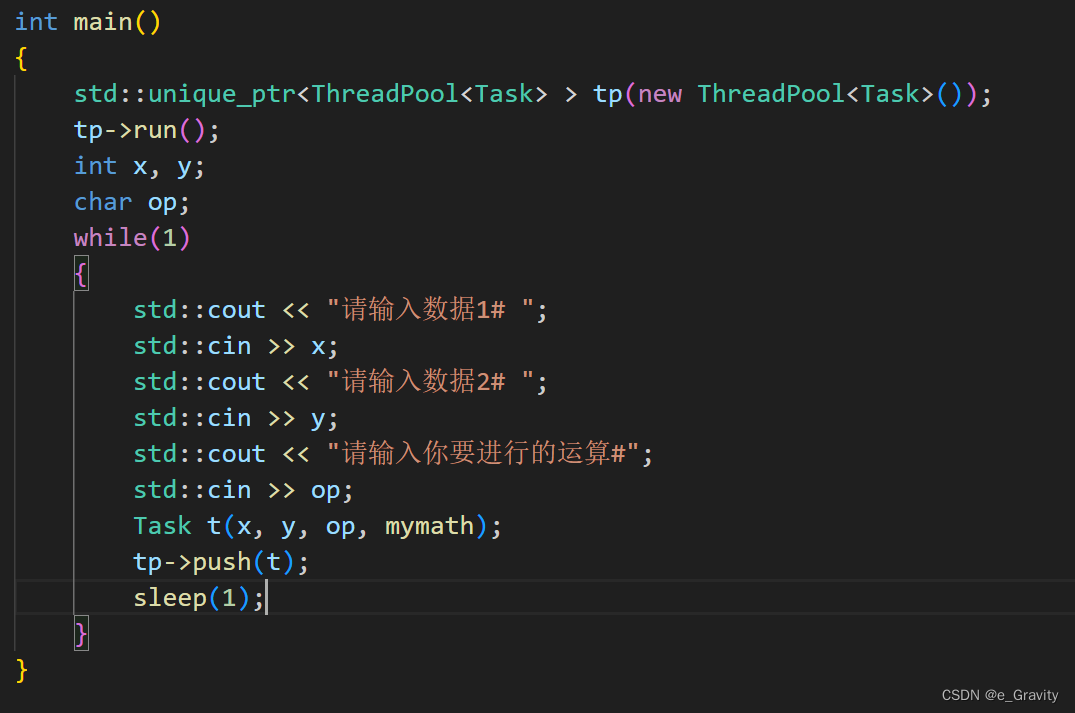
main.cc
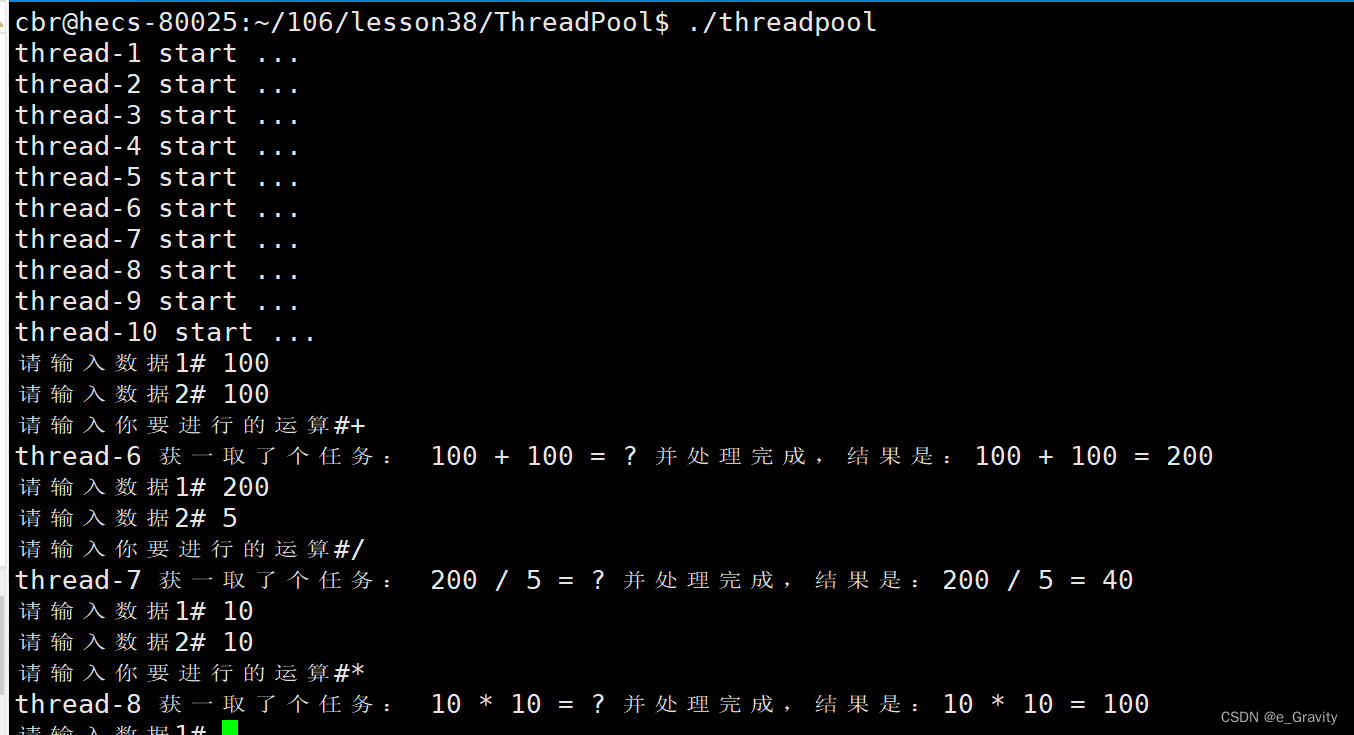
测试结果
单例模式版线程池
单例模式
某些类, 只应该具有一个对象(实例), 就称之为单例。单例模式有俩种实现方式:饿汉和懒汉
饿汉方式实现单例模式
template <typename T>
class Singleton { static T data;
public:  static T* GetInstance() {  return &data;}
};
懒汉方式实现单例模式
template <typename T>
class Singleton {   static T* inst;
public:   static T* GetInstance() {   if (inst == NULL) {       inst = new T();    }    return inst; }
};
这里存在一个严重的问题:线程不安全。
第一次调用 GetInstance 的时候, 如果两个线程同时调用, 可能会创建出两份 T 对象的实例.
懒汉方式实现单例模式(线程安全版本)
// 懒汉模式, 线程安全、
template <typename T>
class Singleton
{volatile static T *inst; // 需要设置 volatile 关键字, 否则可能被编译器优化. static std::mutex lock;public:static T *GetInstance(){if (inst == NULL){ // 双重判定空指针, 降低锁冲突的概率, 提高性能.lock.lock(); // 使用互斥锁, 保证多线程情况下也只调用一次 new.if (inst == NULL){inst = new T();}lock.unlock();}return inst;}
};
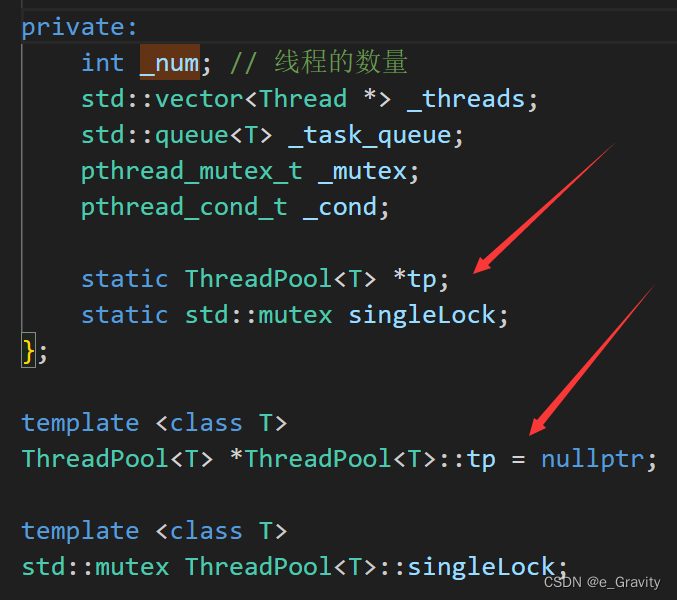
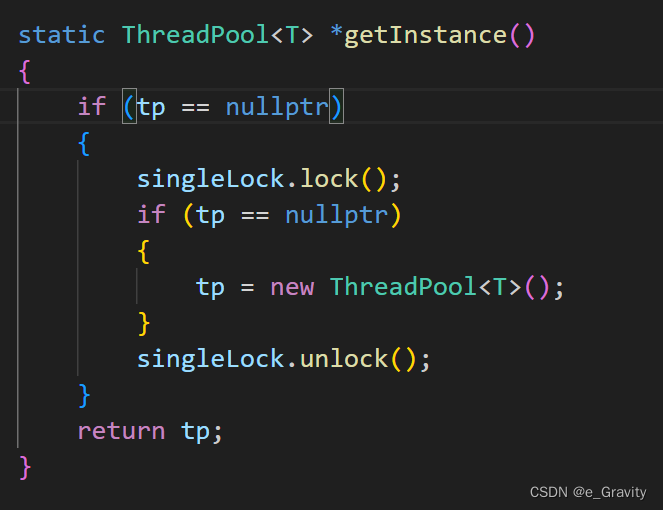
线程池的懒汉模式【线程安全】