数据结构之顺序表

目录
一、概念
二、构造方法
三、常见操作
四、扩容机制
五、ArrayList的具体使用
1、简单洗牌算法
2、杨辉三角
一、概念
是一段物理地址连续存储元素的线性结构,采用数组存储,实现了List接口。
二、构造方法
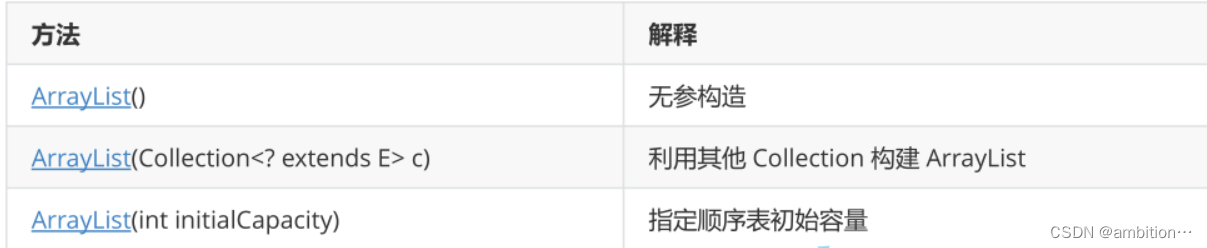
无参构造时,第一次add时会默认容量为10.
三、常见操作

四、扩容机制
ArrayList是一个动态类型的顺序表,在插入元素过程中会自动扩容。以下是扩容源代码:

会先按照原来容量的1.5倍扩容,若用户所需容量已经大于1.5倍扩容结果,则以用户指定大小扩容。若扩容后的空间大于MAX_ARRAY_SIZE,则重新计算容量大小。使用Arrays的copyOf方法扩容。
五、ArrayList的具体使用
1、简单洗牌算法
实现买牌(展示牌)、洗牌、三人轮流接五回牌
import java.util.ArrayList;
import java.util.List;
import java.util.Random;class card{private String flower;  //牌的花色private int number;    // 牌的数字public String getFlower() {return flower;}public void setFlower(String flower) {this.flower = flower;}public int getNumber() {return number;}public void setNumber(int number) {this.number = number;}public card(String flower,int number){this.flower=flower;this.number=number;}@Overridepublic String toString() {return flower+":"+number;}
}
class cardDo {public static final String[] flowers=new String[]{"♥","♠","♦","♣"};//买牌public List<card> buyCards(){List<card> cardList=new ArrayList<>();for (int i=0;i<4;i++){for(int j=0;j<13;j++){card temp=new card(flowers[i],j+1);cardList.add(temp);}}return cardList;}//洗牌public List<card> washCards(List<card> cardList){Random random=new Random();for(int i=cardList.size()-1;i>0;i--){int index=random.nextInt(i);swap(cardList,i,index);}return cardList;}public void swap(List<card> cardList,int index1,int index2){card temp=cardList.get(index1);cardList.set(index1,cardList.get(index2));cardList.set(index2,temp);}//接牌public void getCards(List<card> cardList){List<List<card>> hands=new ArrayList<>();List<card> hand1=new ArrayList<>();List<card> hand2=new ArrayList<>();List<card> hand3=new ArrayList<>();hands.add(hand1);hands.add(hand2);hands.add(hand3);for(int i=0;i<5;i++){for(int j=0;j<3;j++){card temp=cardList.remove(0);hands.get(j).add(temp);}}System.out.print("第一个人接的牌如下:");System.out.println(hand1); //默认调用toStringSystem.out.print("第二个人接的牌如下:");System.out.println(hand2);System.out.print("第三个人接的牌如下:");System.out.println(hand3);System.out.print("剩下的牌如下:");System.out.println(cardList);}
}
public class test {public static void main(String[] args) {cardDo carddo=new cardDo();System.out.println("买的牌如下:");List<card> cards=carddo.buyCards();System.out.println(cards);  System.out.println("洗的牌如下:");List<card> newCards=carddo.washCards(cards);System.out.println(newCards);carddo.getCards(newCards);}
}

2、杨辉三角
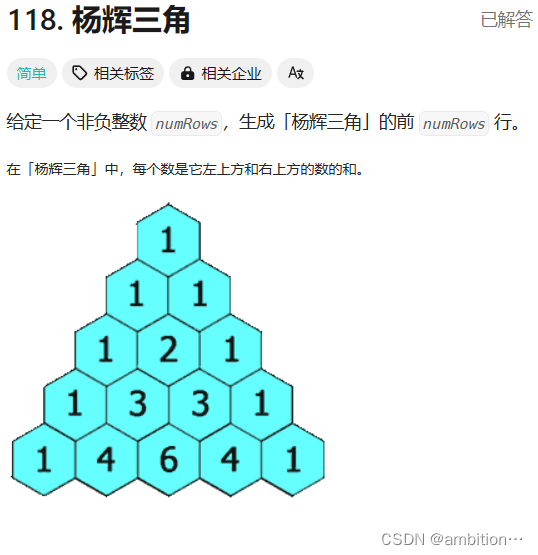
class Solution {public List<List<Integer>> generate(int numRows) {List<List<Integer>> numbers=new ArrayList<>();List<Integer> number1=new ArrayList<>();number1.add(1);numbers.add(number1);if(numRows==1) return numbers;for(int i=1;i<numRows;i++){List<Integer> number=new ArrayList<>();number.add(1);for(int j=1;j<i;j++){number.add(numbers.get(i-1).get(j)+numbers.get(i-1).get(j-1));}number.add(1);numbers.add(number);}return numbers;}
}