请看下面元函数_if:
template <bool B, typename L, typename R>
struct _if
{
typedef R type;
};
template <typename L, typename R>
struct _if<true, L, R>
{
typedef L type;
};
执行以下代码(1):
#include<iostream>/// <summary>
/// _if结构
/// </summary>
/// <typeparam name="L"></typeparam>
/// <typeparam name="R"></typeparam>
/// <typeparam name="B"></typeparam>
template <bool B, typename L, typename R>
struct _if
{typedef R type;_if(){std::cout << "结构1" << "\n";}
};void main()
{//std::string var1 = "text"_if<true, int, std::string>::type var1 = "text";_if<true, int, std::string> a1;}
输出:

现在上面代码中再加一个_if结构2
/// <summary>
/// _if结构2
/// </summary>
/// <typeparam name="L"></typeparam>
/// <typeparam name="R"></typeparam>
template <typename L, typename R>
struct _if<true, L, R>
{
typedef L type;
};
/// <summary>
/// _if结构
/// </summary>
/// <typeparam name="L"></typeparam>
/// <typeparam name="R"></typeparam>
/// <typeparam name="B"></typeparam>
template <bool B, typename L, typename R>
struct _if
{typedef R type;_if(){std::cout << "结构1" << "\n";}
};/// <summary>
/// i_if结构2
/// </summary>
/// <typeparam name="L"></typeparam>
/// <typeparam name="R"></typeparam>
template <typename L, typename R>
struct _if<true, L, R>
{typedef L type;
};void main()
{//std::string var1 = "text"_if<true, int, std::string>::type var1 = "text";_if<true, int, std::string> a1;}
执行结果:
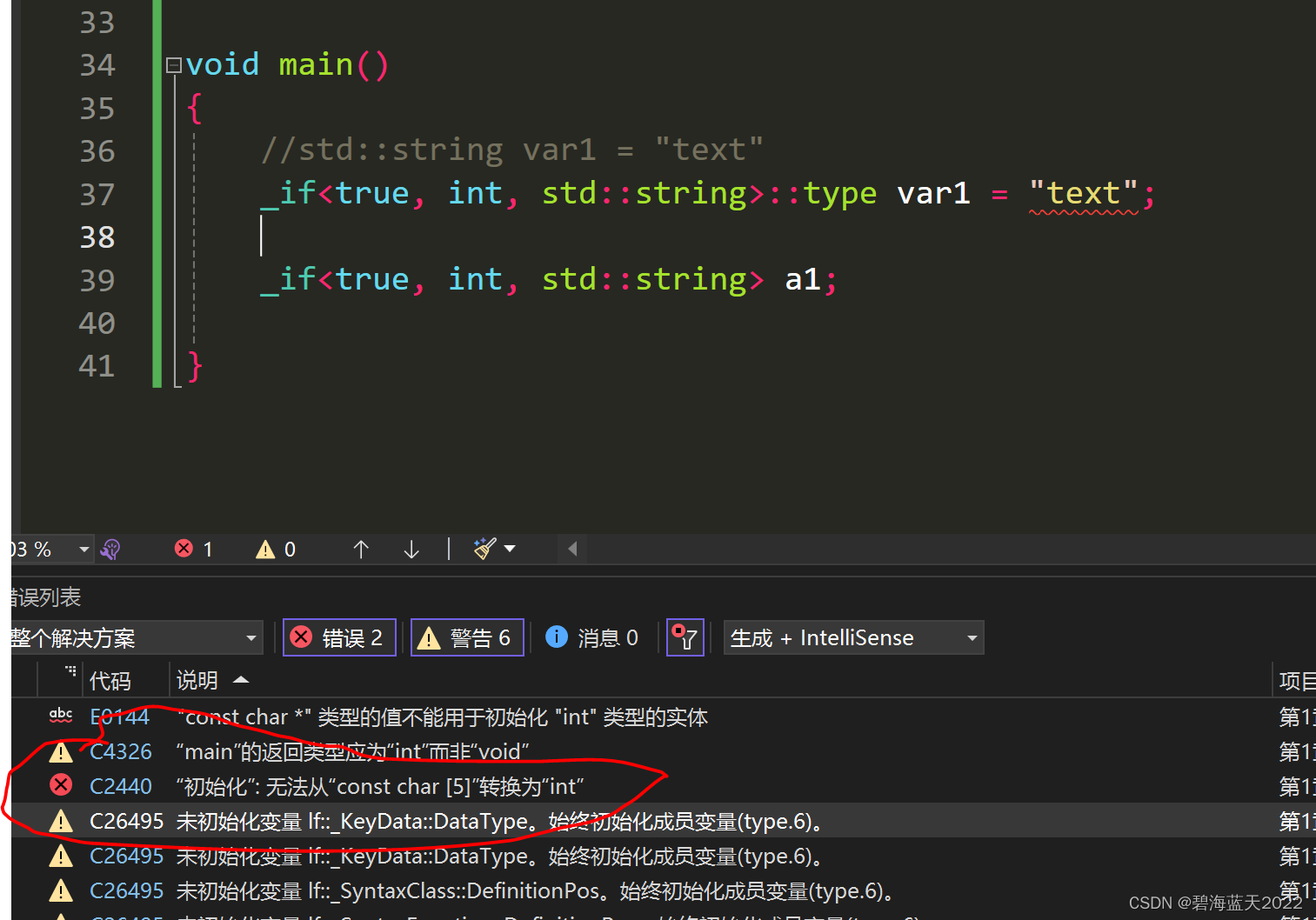
为什么编译不过,因为现在用的是结构:

也就是说:_if<true, int, std::string>::type var1 => int (返回整型),修改代码:
#include<iostream>/// <summary>
/// _if结构
/// </summary>
/// <typeparam name="L"></typeparam>
/// <typeparam name="R"></typeparam>
/// <typeparam name="B"></typeparam>
template <bool B, typename L, typename R>
struct _if
{typedef R type;_if(){std::cout << "结构1" << "\n";}
};/// <summary>
/// i_if结构2
/// </summary>
/// <typeparam name="L"></typeparam>
/// <typeparam name="R"></typeparam>
template <typename L, typename R>
struct _if<true, L, R>
{typedef L type;_if(){std::cout << "结构2" << "\n";}
};void main()
{ _if<true, int, std::string>::type var1 = 5;_if<false, int, std::string>::type var2 = "text";_if<true, int, std::string> a1;_if<false, int, std::string> a2;
}
输出:
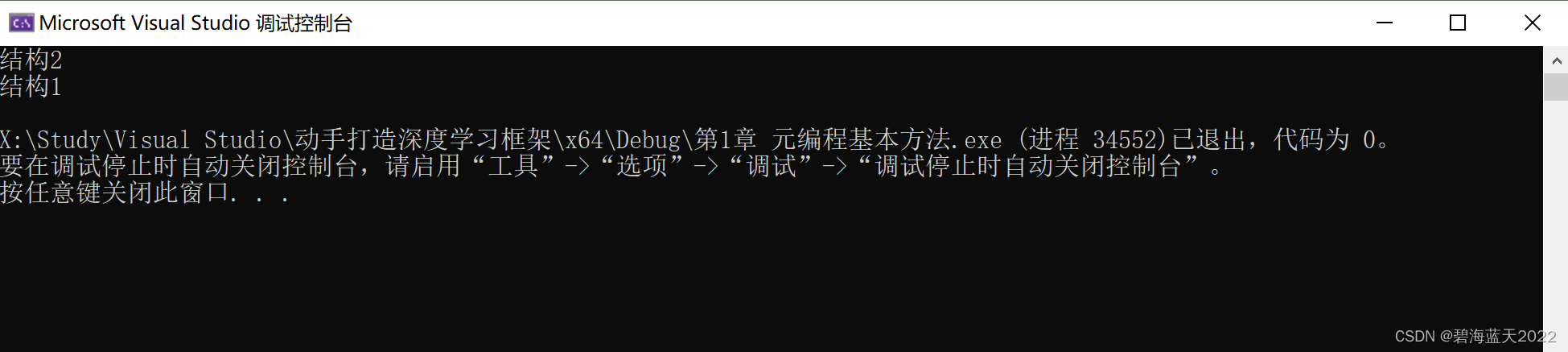 这就是元函数_if原理:
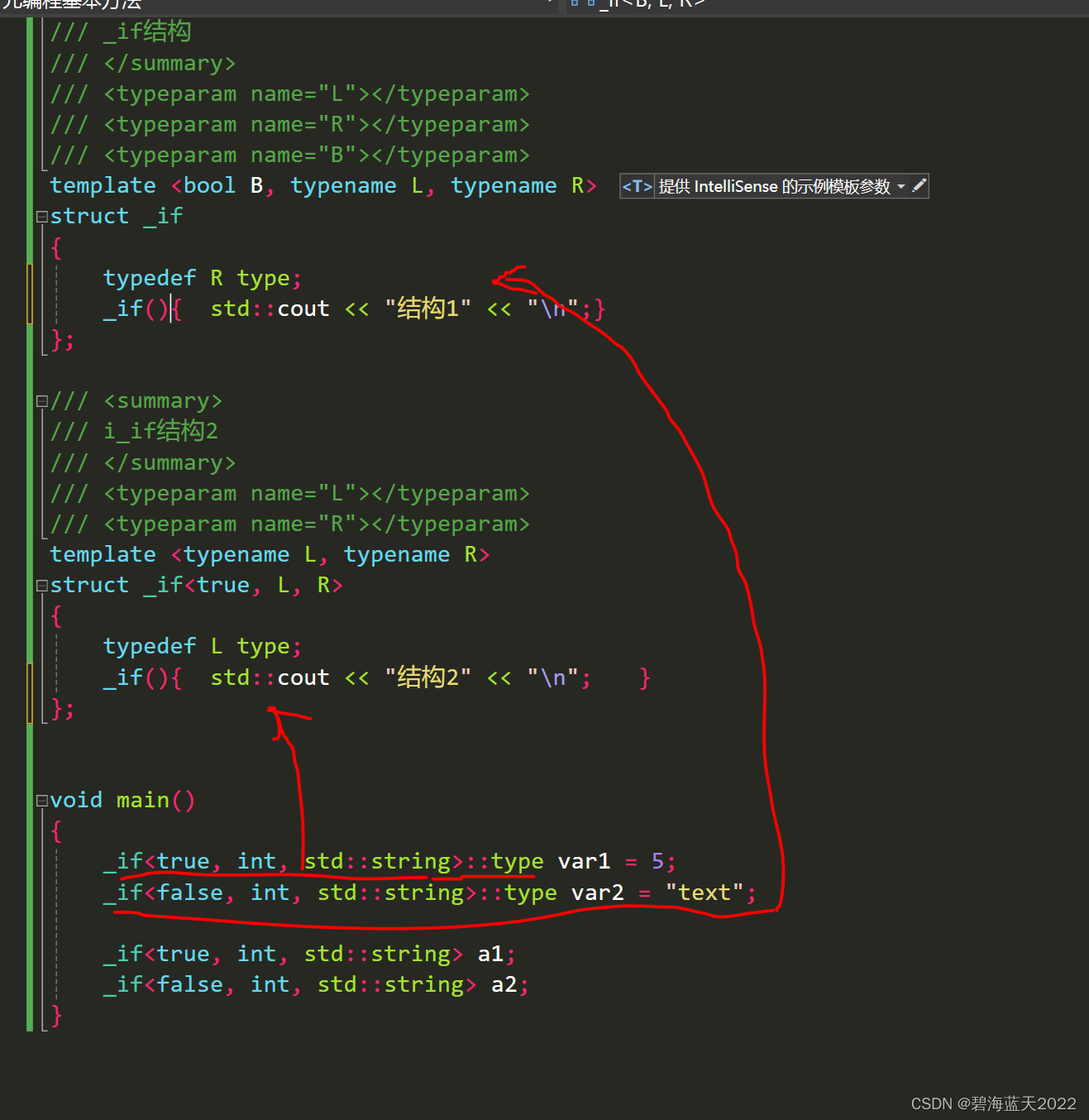
_if 原函数:
template <bool B, typename L, typename R>
struct _if{	typedef R type;};template <typename L, typename R>
struct _if<true, L, R>{ 	typedef L type;};
