LeetCode 232.用栈实现队列(详解) (๑•̌.•๑)
 (๑•̌.•๑))
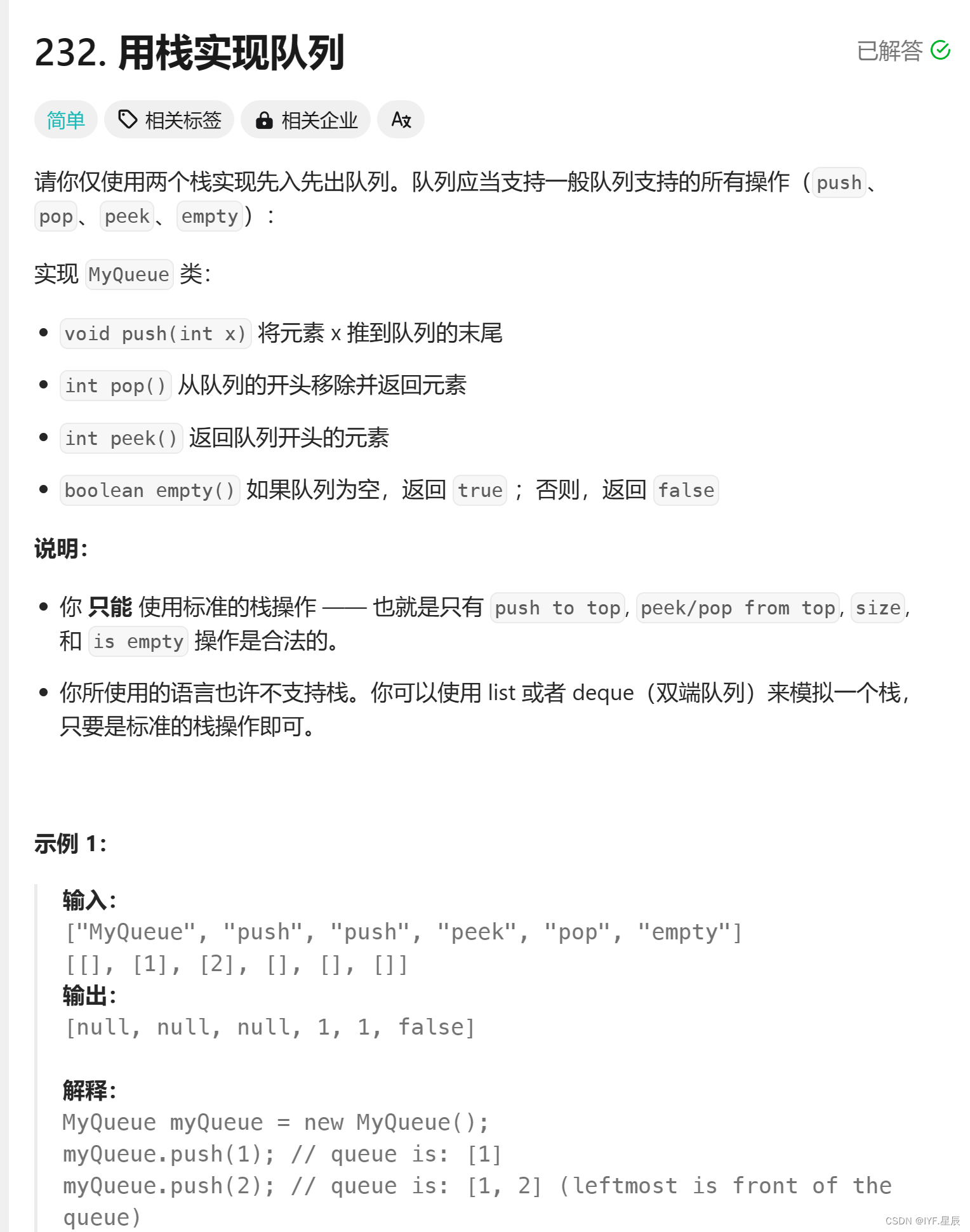
题目描述:
解题思路:
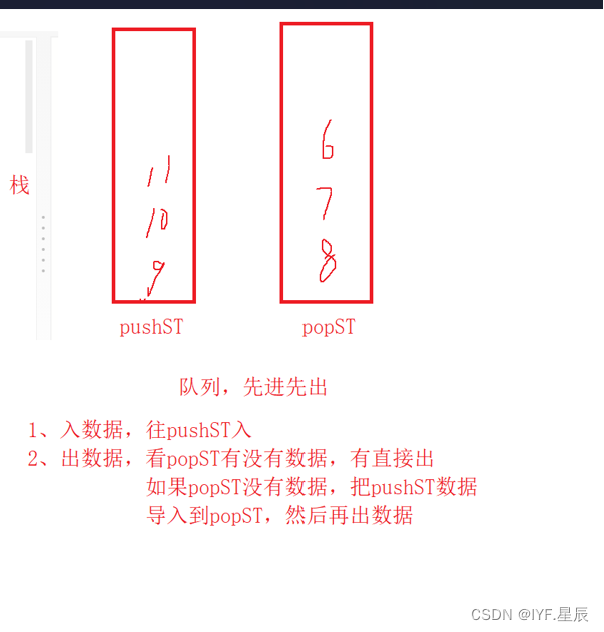
创建两个栈,一个用于入数据,一个用于出数据。分别是pushST和popST;
1.如果是入数据就直接入进pushST
2.如果是出数据,先检查popST中有无数据,如果有数据,就直接出。如果没数据,就将pushST中的数据放进popST中,再从popST中出数据。
当pushST中的数据入到popST时,数据是顺序的,刚好满足队列的条件,直接出
用c语言实现栈,没法直接引用,这里需要自己创建一个栈,在完成上述操作。如果还不会栈的小伙伴可以看看我的这篇博客 【数据结构】栈【详解】૮₍ ˃ ⤙ ˂ ₎ა-CSDN博客

栈的实现:
//栈的声明与定义
typedef int STDataType;//定义栈中的数据类型
struct Stack
{STDataType* a;//用于指向后续开辟的空间int top;       // 栈顶int capacity;  // 容量,方便增容
};//typedef struct Stack ST;
typedef struct Stack Stack;
//初始化栈
void StackInit(Stack* pst);
//摧毁栈
void StackDestroy(Stack* pst);
//入栈
void StackPush(Stack* pst, STDataType x);
//出栈
void StackPop(Stack* pst);
//返回栈顶元素
STDataType StackTop(Stack* pst);// 空返回1 非空返回0
//int StackEmpty(Stack* pst);
//栈的判空操作
bool StackEmpty(Stack* pst);
//返回栈的大小
int StackSize(Stack* pst);void StackInit(Stack* pst)
{assert(pst);//pst->a = NULL;//pst->top = 0;//pst->capacity = 0;pst->a = (STDataType*)malloc(sizeof(STDataType) * 4);pst->top = 0;pst->capacity = 4;
}void StackDestroy(Stack* pst)
{assert(pst);free(pst->a);pst->a = NULL;pst->capacity = pst->top = 0;
}// 性质就决定在栈顶出入数据
void StackPush(Stack* pst, STDataType x)
{assert(pst);if (pst->top == pst->capacity){STDataType* tmp = (STDataType*)realloc(pst->a, sizeof(STDataType)*pst->capacity * 2);if (tmp == NULL){printf("realloc fail\n");exit(-1); // 结束整个程序}pst->a = tmp;pst->capacity *= 2;}pst->a[pst->top] = x;pst->top++;
}void StackPop(Stack* pst)
{assert(pst);assert(!StackEmpty(pst));pst->top--;
}STDataType StackTop(Stack* pst)
{assert(pst);assert(!StackEmpty(pst));return pst->a[pst->top - 1];
}// 空返回1 非空返回0
//int StackEmpty(Stack* pst);
bool StackEmpty(Stack* pst)
{assert(pst);return pst->top == 0;
}int StackSize(Stack* pst)
{assert(pst);return pst->top;
}
队列的实现(需要用到前面的栈):
//用栈定义队列,其中包含两个栈,用于入数据和出数据
typedef struct {Stack pushST;Stack popST;
} MyQueue;/** Initialize your data structure here. */
//队列的初始化
MyQueue* myQueueCreate() {MyQueue* q = (MyQueue*)malloc(sizeof(MyQueue));StackInit(&q->pushST);StackInit(&q->popST);return q;
}/** Push element x to the back of queue. */
//入队列
void myQueuePush(MyQueue* obj, int x) {StackPush(&obj->pushST, x);
}/** Removes the element from in front of queue and returns that element. */
//出队列
int myQueuePop(MyQueue* obj) {/*if(StackEmpty(&obj->popST)){while(!StackEmpty(&obj->pushST)){StackPush(&obj->popST, StackTop(&obj->pushST));StackPop(&obj->pushST);}}*/int top = myQueuePeek(obj);StackPop(&obj->popST);return top;
}/** Get the front element. */
//判断栈内数据的情况,并返回栈顶元素
int myQueuePeek(MyQueue* obj) {if (StackEmpty(&obj->popST)){while (!StackEmpty(&obj->pushST)){StackPush(&obj->popST, StackTop(&obj->pushST));StackPop(&obj->pushST);}}return StackTop(&obj->popST);
}/** Returns whether the queue is empty. */
//队列的判空
bool myQueueEmpty(MyQueue* obj) {return StackEmpty(&obj->pushST) && StackEmpty(&obj->popST);
}
//摧毁队列
void myQueueFree(MyQueue* obj) {StackDestroy(&obj->pushST);StackDestroy(&obj->popST);free(obj);
}

完整代码:
//栈的声明与定义
typedef int STDataType;//定义栈中的数据类型
struct Stack
{STDataType* a;//用于指向后续开辟的空间int top;       // 栈顶int capacity;  // 容量,方便增容
};//typedef struct Stack ST;
typedef struct Stack Stack;
//初始化栈
void StackInit(Stack* pst);
//摧毁栈
void StackDestroy(Stack* pst);
//入栈
void StackPush(Stack* pst, STDataType x);
//出栈
void StackPop(Stack* pst);
//返回栈顶元素
STDataType StackTop(Stack* pst);// 空返回1 非空返回0
//int StackEmpty(Stack* pst);
//栈的判空操作
bool StackEmpty(Stack* pst);
//返回栈的大小
int StackSize(Stack* pst);void StackInit(Stack* pst)
{assert(pst);//pst->a = NULL;//pst->top = 0;//pst->capacity = 0;pst->a = (STDataType*)malloc(sizeof(STDataType) * 4);pst->top = 0;pst->capacity = 4;
}void StackDestroy(Stack* pst)
{assert(pst);free(pst->a);pst->a = NULL;pst->capacity = pst->top = 0;
}// 性质就决定在栈顶出入数据
void StackPush(Stack* pst, STDataType x)
{assert(pst);if (pst->top == pst->capacity){STDataType* tmp = (STDataType*)realloc(pst->a, sizeof(STDataType)*pst->capacity * 2);if (tmp == NULL){printf("realloc fail\n");exit(-1); // 结束整个程序}pst->a = tmp;pst->capacity *= 2;}pst->a[pst->top] = x;pst->top++;
}void StackPop(Stack* pst)
{assert(pst);assert(!StackEmpty(pst));pst->top--;
}STDataType StackTop(Stack* pst)
{assert(pst);assert(!StackEmpty(pst));return pst->a[pst->top - 1];
}// 空返回1 非空返回0
//int StackEmpty(Stack* pst);
bool StackEmpty(Stack* pst)
{assert(pst);return pst->top == 0;
}int StackSize(Stack* pst)
{assert(pst);return pst->top;
}
//用栈定义队列,其中包含两个栈,用于入数据和出数据
typedef struct {Stack pushST;Stack popST;
} MyQueue;/** Initialize your data structure here. */
//队列的初始化
MyQueue* myQueueCreate() {MyQueue* q = (MyQueue*)malloc(sizeof(MyQueue));StackInit(&q->pushST);StackInit(&q->popST);return q;
}/** Push element x to the back of queue. */
//入队列
void myQueuePush(MyQueue* obj, int x) {StackPush(&obj->pushST, x);
}/** Removes the element from in front of queue and returns that element. */
//出队列
int myQueuePop(MyQueue* obj) {/*if(StackEmpty(&obj->popST)){while(!StackEmpty(&obj->pushST)){StackPush(&obj->popST, StackTop(&obj->pushST));StackPop(&obj->pushST);}}*/int top = myQueuePeek(obj);StackPop(&obj->popST);return top;
}/** Get the front element. */
//判断栈内数据的情况,并返回栈顶元素
int myQueuePeek(MyQueue* obj) {if (StackEmpty(&obj->popST)){while (!StackEmpty(&obj->pushST)){StackPush(&obj->popST, StackTop(&obj->pushST));StackPop(&obj->pushST);}}return StackTop(&obj->popST);
}/** Returns whether the queue is empty. */
//队列的判空
bool myQueueEmpty(MyQueue* obj) {return StackEmpty(&obj->pushST) && StackEmpty(&obj->popST);
}
//摧毁队列
void myQueueFree(MyQueue* obj) {StackDestroy(&obj->pushST);StackDestroy(&obj->popST);free(obj);
}
博客到这里也是结束了,喜欢的小伙伴可以点赞加关注支持下博主,这对我真的很重要~~