使用 TypeVar 创建 Self 类型变量,方便用户在 Pycharm 编辑器中链式调用校验方法

目录
- 一、前置说明
- 1、总体目录
- 2、相关回顾
- 3、本节目标
- 二、操作步骤
- 1、项目目录
- 2、代码实现
- 3、测试代码
- 4、日志输出
- 三、后置说明
- 1、要点小结
- 2、下节准备
一、前置说明
1、总体目录
- 《 pyparamvalidate 参数校验器,从编码到发布全过程》
2、相关回顾
- 使用 RaiseExceptionMeta 元类隐式装饰 Validator 类中的所有校验方法
3、本节目标
- 了解使用
TypeVar创建泛型类型。 - 了解类型注解的使用。
- 了解返回
Self类型注解,支持编辑器如pycharm智能识别可链式调用的方法。
二、操作步骤
1、项目目录
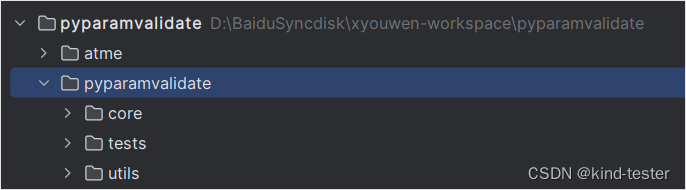
atme:@me用于存放临时的代码片断或其它内容。pyparamvalidate: 新建一个与项目名称同名的package,为了方便发布至pypi。core: 用于存放核心代码。tests: 用于存放测试代码。utils: 用于存放一些工具类或方法。
2、代码实现
atme/demo/validator_v4/validator.py
import functools
import inspect
from typing import TypeVardef _error_prompt(value, exception_msg=None, rule_des=None, field=None):default = f'"{value}" is invalid.'prompt = exception_msg or rule_desprompt = f'{default} due to: {prompt}' if prompt else defaultprompt = f'{field} error: {prompt}' if field else promptreturn promptdef raise_exception(func):@functools.wraps(func)def wrapper(self, *args, **kwargs):bound_args = inspect.signature(func).bind(self, *args, **kwargs).argumentsexception_msg = kwargs.get('exception_msg', None) or bound_args.get('exception_msg', None)error_prompt = _error_prompt(self.value, exception_msg, self._rule_des, self._field)result = func(self, *args, **kwargs)if not result:raise ValueError(error_prompt)return selfreturn wrapperclass RaiseExceptionMeta(type):def __new__(cls, name, bases, dct):for key, value in dct.items():if isinstance(value, staticmethod):dct[key] = staticmethod(raise_exception(value.__func__))if isinstance(value, classmethod):dct[key] = classmethod(raise_exception(value.__func__))if inspect.isfunction(value) and not key.startswith("__"):dct[key] = raise_exception(value)return super().__new__(cls, name, bases, dct)'''
- TypeVar 是 Python 中用于声明类型变量的工具
- 声明一个类型变量,命名为 'Self', 意思为表示类的实例类型
- bound 参数指定泛型类型变量的上界,即限制 'Self' 必须是 'Validator' 类型或其子类型
'''
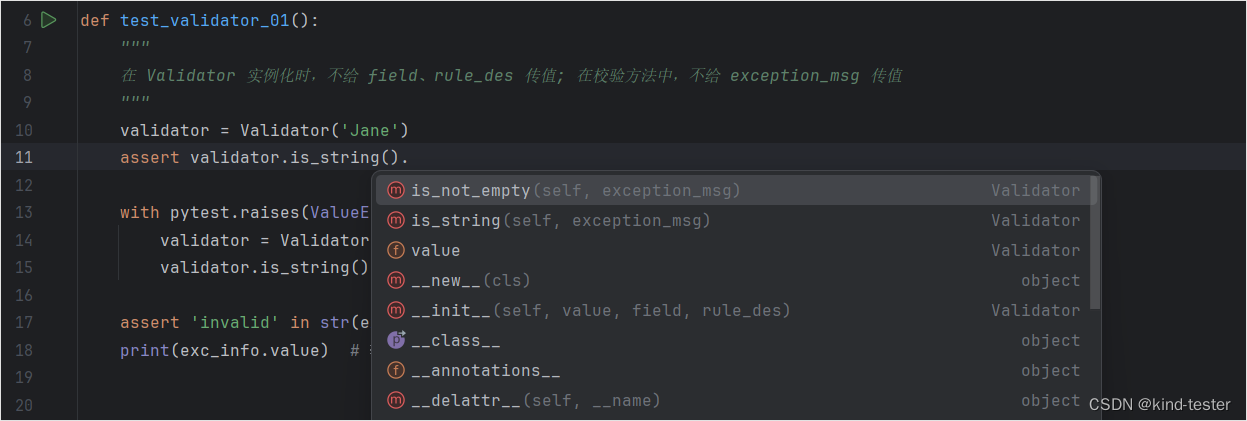
Self = TypeVar('Self', bound='Validator')class Validator(metaclass=RaiseExceptionMeta):def __init__(self, value, field=None, rule_des=None):self.value = valueself._field = fieldself._rule_des = rule_desdef is_string(self, exception_msg=None) -> Self:"""将返回类型注解定义为 Self, 支持编辑器如 pycharm 智能提示链式调用方法,如:Validator(input).is_string().is_not_empty()- 从 Python 3.5 版本开始支持类型注解- 在实际的编写中,你可以遵循注解来编写代码,在 Python 3.5 中引入了 PEP 484(Python Enhancement Proposal 484),其中包括了类型注解的概念,并引入了 typing 模块,用于支持类型提示和静态类型检查;- 类型注解允许开发者在函数参数、返回值和变量上添加类型信息,但是在运行时,Python 解释器不会检查这些注解是否正确。- 它们主要用于提供给静态类型检查器或类型检查,但解释器本身并不会强制执行这些注解;- Python 运行时并不强制执行这些注解,Python 依然是一门动态类型的语言。- 本方法中:- 返回值类型为 bool 类型,用于与装饰器函数 raise_exception 配合使用,校验 self.value 是否通过;- 为了支持编辑器如 pycharm 智能识别链式调用方法,将返回类型注解定义为 Self, 如:Validator(input).is_string().is_not_empty();- Self, 即 'Validator', 由 Self = TypeVar('Self', bound='Validator') 定义;- 如果返回类型不为 Self, 编辑器如 pycharm 在 Validator(input).is_string() 之后,不会智能提示 is_not_empty()"""return isinstance(self.value, str)def is_not_empty(self, exception_msg=None) -> Self:return bool(self.value)
3、测试代码
atme/demo/validator_v4/test_validator.py
import pytestfrom atme.demo.validator_v4.validator import Validatordef test_validator_01():"""在 Validator 实例化时,不给 field、rule_des 传值; 在校验方法中,不给 exception_msg 传值"""validator = Validator('Jane')assert validator.is_string().is_not_empty()with pytest.raises(ValueError) as exc_info:validator = Validator(123)validator.is_string().is_not_empty()assert 'invalid' in str(exc_info.value)print(exc_info.value) # 输出: "123" is invalid.def test_validator_02():"""在 Validator 实例化时,给 field、rule_des 传值"""validator = Validator('Jane', field='name', rule_des='name must be string from rule des.')assert validator.is_string().is_not_empty()with pytest.raises(ValueError) as exc_info:validator = Validator(123, field='name', rule_des='name must be string from rule des.')validator.is_string().is_not_empty()assert 'name must be string from rule des.' in str(exc_info.value)print(exc_info.value) # 输出: name error: "123" is invalid. due to: name must be string from rule des.def test_validator_03():"""在 Validator 实例化时,给 field、rule_des 传值; 在校验方法中,给 exception_msg 传值"""validator = Validator('Jane', field='name', rule_des='name must be string from rule des.')assert validator.is_string().is_not_empty()with pytest.raises(ValueError) as exc_info:validator = Validator(123, field='name', rule_des='name must be string from rule des.')validator.is_string('name must be string from method exception msg.').is_not_empty()assert 'name must be string from method exception msg.' in str(exc_info.value)print(exc_info.value) # 输出: "123" is invalid due to "name error: name must be string from method exception msg."def test_validator_04():"""field_name 为空"""validator = Validator('Jane', rule_des='name must be string from rule des.')assert validator.is_string().is_not_empty()with pytest.raises(ValueError) as exc_info:validator = Validator(123, rule_des='name must be string from rule des.')validator.is_string('name must be string from method exception msg.').is_not_empty()assert 'name must be string from method exception msg.' in str(exc_info.value)print(exc_info.value) # 输出: "123" is invalid due to "name must be string from method exception msg."4、日志输出
执行 test 的日志如下,验证通过:
============================= test session starts =============================
collecting ... collected 4 itemstest_validator.py::test_validator_01 PASSED                              [ 25%]"123" is invalid.test_validator.py::test_validator_02 PASSED                              [ 50%]name error: "123" is invalid. due to: name must be string from rule des.test_validator.py::test_validator_03 PASSED                              [ 75%]name error: "123" is invalid. due to: name must be string from method exception msg.test_validator.py::test_validator_04 PASSED                              [100%]"123" is invalid. due to: name must be string from method exception msg.============================== 4 passed in 0.01s ==============================
三、后置说明
1、要点小结
- 在 Python 3.5 中引入类型注解的概念,用于支持类型提示和静态类型检查;
- 类型注解允许开发者在函数参数、返回值和变量上添加类型信息,但是在运行时,Python 解释器不会检查这些注解是否正确;
- 它们主要用于提供给静态类型检查器或代码编辑器进行,以提供更好的代码提示和错误检测;
- Python 运行时并不强制执行这些注解,Python 依然是一门动态类型的语言。
- 定义
Self = TypeVar('Self', bound='Validator')类型变量,并在校验方法中定义返回注释类型Self,使编辑器如Pycharm能够智能提示链式调用方法。
2、下节准备
- 基于
Validator类实现ParamValidator,用于校验函数参数
点击返回主目录