小白入门基础 - Restful

一:REST与RESTful:
REST:表现层状态转移,资源在网络中以某种形式进行状态转移。
RESTful是基于REST理念的一套开发风格,是具体的开发规则。
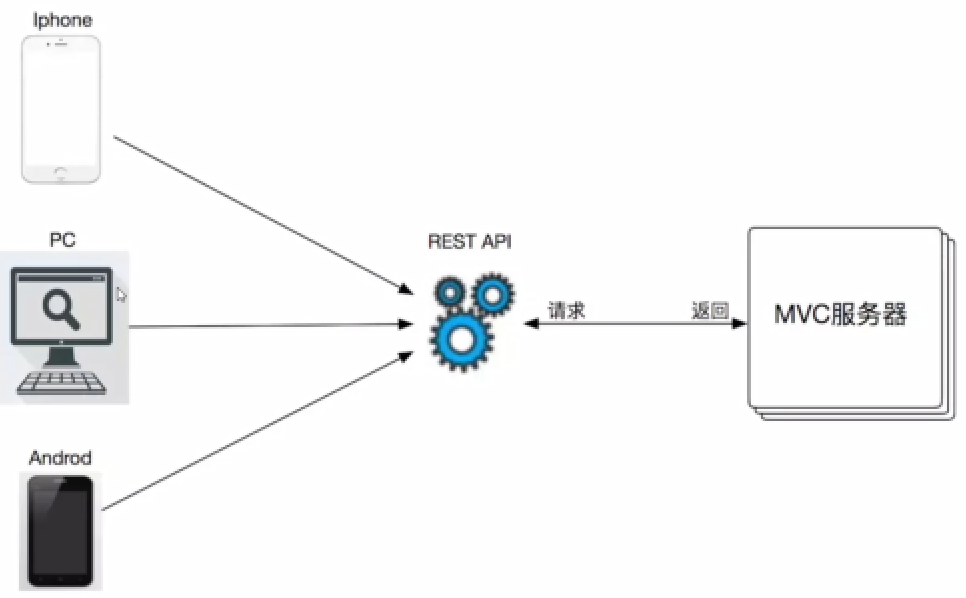
服务器端只返回数据,以json或者xml的格式。
RESTful开发规范:
• 使用URL作为用户交互入口
• 明确的语义规范(GET|POST|PUT|DELETE)
• 只返回数据(JSON|XML),不包含任何展现
RESTful命名要求:

二:第一个RESTful应用
@Controller
@RequestMapping("/restful")  //URL中所有的都是名词
public class RestfulController {@GetMapping(value = "/request",produces = "application/json;charset=utf-8")@ResponseBodypublic String doGetRequest(){return "{\"message\":\"测试\"}";  //使用\原义输出}
}
三:实现RESTful实验室
一般PC和移动端都可以调用API接口,下面模拟PC端调用,使用Ajax:

通过ajax发送页面请求:
<!DOCTYPE html>
<html lang="en">
<head><meta charset="UTF-8"><title>RESTful</title><script src="jquery-3.4.1.min.js"></script><script>$(function () {$("#btnGet").click(function () {$.ajax({url : "/restful/request",type : "get",dataType : "json",success : function (json) {$("#message").text(json.message)}})})})</script>
</head>
<body>
<input type="button" id="btnGet" value="发送Get请求">
<h2 id="message"></h2>
</body>
</html>
因为定义了webapp为静态文件的根目录,所以client.html可以直接访问。

竟然产生了乱码,查看请求头,发现采用不正确的字符集。
<mvc:annotation-driven><mvc:message-converters><bean class="org.springframework.http.converter.StringHttpMessageConverter"><property name="supportedMediaTypes"><list><value>test/html;charset=utf-8</value><!--通知浏览器以这种格式加载数据--><value>application/json;charset=utf-8</value></list></property></bean></mvc:message-converters>
</mvc:annotation-driven>
添加以上配置就可以了。(只能解决ajax乱码问题)
四:RestController注解与路径变量
(1)RestController
@Controller
@RequestMapping("/restful")  //URL中所有的都是名词
public class RestfulController {@GetMapping(value = "/request",produces = "application/json;charset=utf-8")@ResponseBodypublic String doGetRequest(){return "{\"message\":\"测试\"}";  //使用\原义输出}
}
如果我们希望返回纯文本数据,我们必须要使用@ResponseBody这个注解。
如果我们使用@RestController这个注解,那么类下面所有方法都是返回纯文本数据。
@RestController
@RequestMapping("/restful")  //URL中所有的都是名词
public class RestfulController {@GetMapping(value = "/request",produces = "application/json;charset=utf-8")public String doGetRequest(){return "{\"message\":\"测试\"}";  //使用\原义输出}
}
@RestController可以帮我们简化开发。
(2)路径变量
/request/1 对于放在URL中的变量我们可以称之为路径变量。那么如何取值了?
@RestController
@RequestMapping("/restful")  //URL中所有的都是名词
public class RestfulController {@GetMapping(value = "/request/{rid}",produces = "application/json;charset=utf-8")public String doGetRequest(@PathVariable("rid") Integer requestId){System.out.println(requestId);return "{\"message\":\"测试\"}";  //使用\原义输出}
}
使用@PathVariable路径变量注解进行接收,而后赋值给方法参数。
五:JSON序列化
(1)引入步骤
导入依赖包:
<dependency><groupId>com.fasterxml.jackson.core</groupId><artifactId>jackson-core</artifactId><!--一定要使用2.9.9之后的版本,否则会有安全问题--><version>2.9.9</version>
</dependency>
<!--jackson与目标对象交互的根源-->
<dependency><groupId>com.fasterxml.jackson.core</groupId><artifactId>jackson-databind</artifactId><version>2.9.9</version>
</dependency>
<dependency><groupId>com.fasterxml.jackson.core</groupId><artifactId>jackson-annotations</artifactId><version>2.9.9</version>
</dependency>
spring非常智能,只要检查有jackson-core和jackson-databind这两个依赖包。
就会自动启用jackson为我们提供json序列化服务。
创建实体类:
public class Person {private String name;private String address;
}
编写控制器:
@GetMapping("/person/{pid}")
public Person findByPersonId(@PathVariable("pid") Integer personId){Person person = new Person();if (personId == 1){person.setName("科比");person.setAddress("湖北罗田");} else if (personId == 2){person.setName("星爷");person.setAddress("湖北安陆");} else {person.setName("无名氏");}return person;
}
如果我们返回一个实体对象,并且配置了@RestController或者@ResponseBody,那么jackson就会自动提供序列化服务。
访问:

(2)返回多个对象
如果一次返回多个对象,我们可以List集合:
@GetMapping("/persons")
public List<Person> findPersons(){List list = new ArrayList();Person p1 = new Person();p1.setName("科比");p1.setAddress("湖北罗田");Person p2 = new Person();p2.setName("科比");p2.setAddress("湖北罗田");list.add(p1);list.add(p2);return list;
}
在前端,我们会收到如下数据:

在页面中,我们可以通过如下方式进行提取:
$(function () {$("#btnPersons").click(function () {$.ajax({url : "/restful/persons",type : "get",datatype : "json",success : function (json) {console.info(json)for(var i=0;i<json.length;i++){var p = json[i];$("#divPersons").append("<h2>" + p.name + "-" + p.address + "</h2>")}}})})
})
(3)时间处理
需要注意的是,jackson对时间处理并不友好:
添加事件属性:
private Date birthday;
如果不做处理,就是直接返回事件戳的形式。
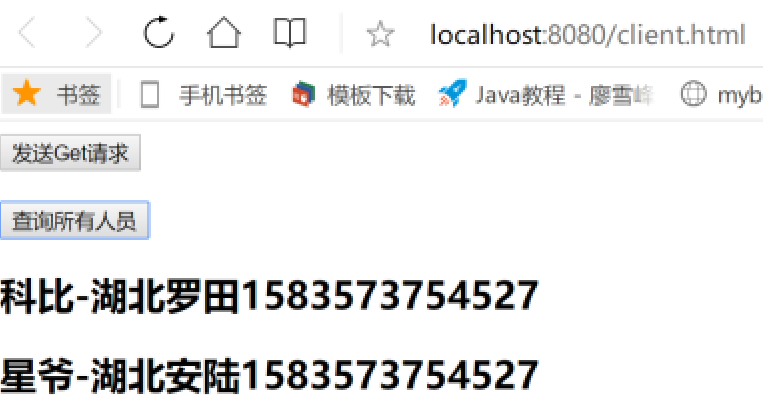
我们只需要添加对应时间注解:
@JsonFormat(pattern = "yyyy-MM-dd HH:mm:ss")
private Date birthday;
就可以正常输出了:
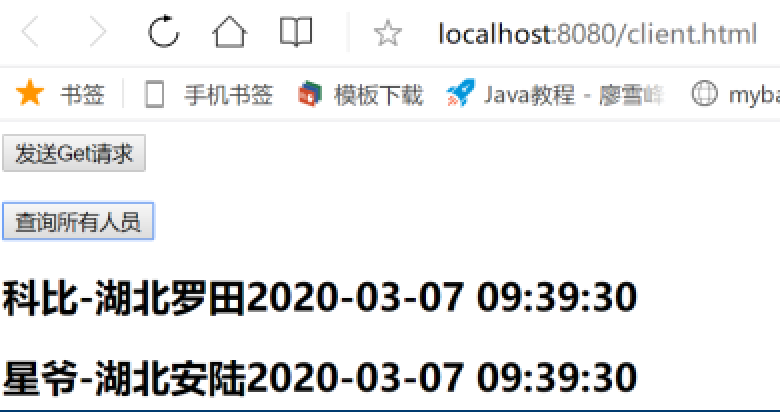
还有需要注意的是默认使用格林时间,需要指定时区:
@JsonFormat(pattern = "yyyy-MM-dd HH:mm:ss",timezone = "GMT+8")
private Date birthday;
六:浏览器的同源策略
同源策略:阻止从一个域加载的脚本去获取另一个域上的资源。
两个不同域名的网站不能通过Ajax访问,这是出于安全的因素考虑。
比如下面两个地址,虽然本质是一个页面,但是却属于不同源.
只要协议、域名、端口有任何不同,都被当做是不同的域。
浏览器Console看到Access-Control-Allow-Origin就代表跨域了。
HTML中允许跨域的标签:
<img> 显式远程图片
<script> 加载远程JS
<link> 加载远程CSS
七:SpringMVC解决跨域
CORS是一种机制,使用额外的HTTP头通知浏览器访问其他域。
URL响应头中包含Access-Control-*指明请求允许跨域。
(1)@CrossOrigin - Controller跨域注解
@RestController
@RequestMapping("/restful")
@CrossOrigin(origins = {"*"})
public class RestfulController {@GetMapping(value = "/request/{rid}",produces = "application/json;charset=utf-8")public String doGetRequest(@PathVariable("rid") Integer requestId){System.out.println(requestId);return "{\"message\":\"测试\"}"; }
}
(2)<mvc:cors> Spring MVC全局跨域配置
<mvc:cors><!--path哪一个路径允许跨域访问--><!--allowed-origins允许谁进行跨域访问--><!--max-age设置缓存时间--><mvc:mapping path="*" allowed-origins="*"/>
</mvc:cors>