String类

> 作者简介:დ旧言~,目前大二,现在学习Java,c,c++,Python等
> 座右铭:松树千年终是朽,槿花一日自为荣。> 目标:熟悉string库
> 毒鸡汤:人生就像一场旅行,不在乎目的地,而在乎沿途的风景以及看风景的心情。
> 望小伙伴们点赞👍收藏✨加关注哟💕💕

🌟前言
学习这个板块可能有点头疼,因为太多的函数,学完都不知道学的是啥😅,正常。所以博主介绍一个学习c++的网站,这个网站也是c++创始人所写的🤔,方便大家学习c++,太良心啦🥰。
官网:cplusplus.com - The C++ Resources Network

⭐主体
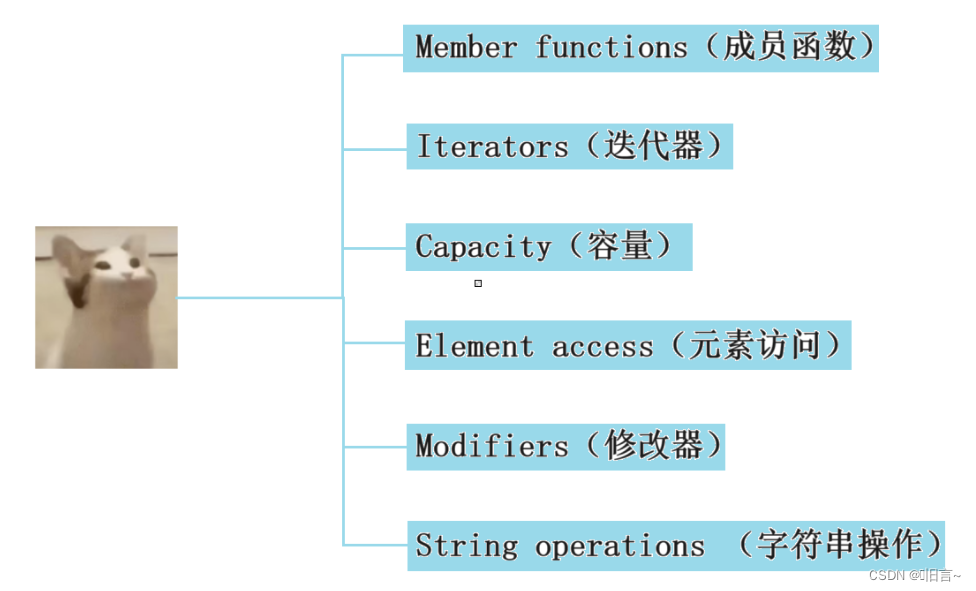
基于C语言的字符串,用起来是在复杂,稍不留神可能还会越界访问。为了操作方便,c++产生了string库,便于操作字符串。咱们就按照c++给的官网学习string库,具体分为六大板块,分别为:Member functions(成员函数),Iterators(迭代器),Capacity(容量),Element access(元素访问),Modifiers(修改器),String operations (字符串操作)☺️☺️☺️。
🌙Member functions(成员函数)
在这个板块中挺重要的,咱也不是全学,到时候可能真的就是从入门到放弃。

💫constructor(构造函数)
构造字符串对象,根据使用的构造函数版本初始化其值。
也就是说根据创建的string类来进行赋初始化。
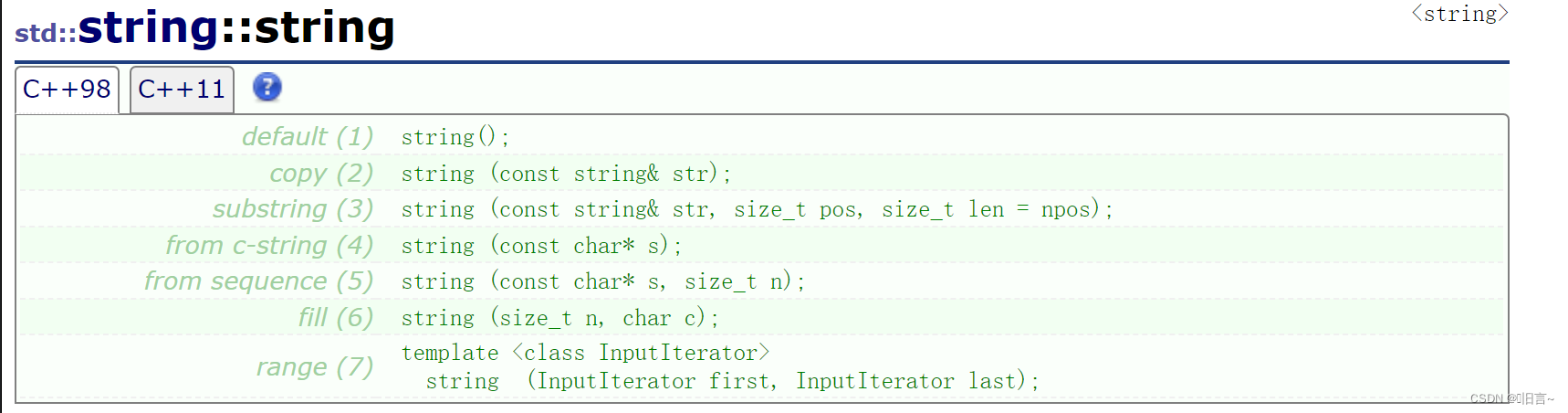
- str:另一个字符串对象,其值被复制或获取。
- pos:str中作为子字符串复制到对象的第一个字符的位置。如果这大于str的长度,则抛出out_of_range。注意:str中的第一个字符由值0(而不是1)表示。
- len:要复制的子字符串的长度(如果字符串较短,则复制尽可能多的字符)。字符串::npos的值表示str结束之前的所有字符。s
那咱们看看这个代码:
#include <iostream>
#include <string>using namespace std;int main()
{// 无参构造函数string s1();// 常量字符串构造函数string s2("hello world");cout << s2 << endl;// 拷贝构造函数string s3(s2);cout << s3 << endl;// 拷贝构造还可以写成下面这样子string s4 = s2;//初始化不够 11 > 9string s5("hello world", 9);cout << s5 << endl;return 0;
}
运行结果:

💫operator=(赋值函数)
为字符串指定一个新值,替换其当前内容。

这里提供了三种赋值函数:
- 通过string对象赋值给string对象
- 通过常量字符串赋值给string对象
- 通过字符赋值给string对象。
#include <iostream>
#include <string>using namespace std;int main()
{//通过string对象赋值给string对象string s1("hello");string s2;s2 = s1;cout << s2 << endl;//通过常量字符串赋值给string对象s2 = "world";cout << s2 << endl;//通过字符赋值给string对象。s2 = 'C';cout << s2 << endl;return 0;
}
运行结果:
🌙Iterators(迭代器)
我们在前面浅谈了迭代器,没有细说,今天有机会了😋,看着迭代器名字刁刁的,本质上还是一种遍历,像我们的for循环,典型的迭代器,咱们先看看最初我们用下标来访问遍历。
string类是提供了[]运算符重载的,这也就意味着string可以让我们像访问数组一样利用下标来访问元素。
#include <iostream>
#include <string>using namespace std;int main()
{string s("hello world");for (size_t i = 0; i < s.size(); i++){cout << s[i] << " ";}cout << endl;return 0;
}
运行结果:
💫利用begin和end实现迭代器
- begin()函数返回的是string字符串的首位置
- end()函数返回的是string字符串最后一个位置(即最后一个字符的下一个位置)
咱看看代码:
#include <iostream>
#include <string>using namespace std;int main()
{string str("hello world");string::iterator it = str.begin();while (it != str.end()){cout << *it;++it;}cout << endl;return 0;
}
运行结果:

💫范围for实现迭代器
不知道小伙伴还记得auto关键字不,auto可以推导出元素属性(int,char)
咱们看看代码:
#include <iostream>
#include <string>using namespace std;int main()
{string s("hello world");for (auto ch : s){cout << ch;}cout << endl;return 0;
}
运行结果:

💫反向迭代器
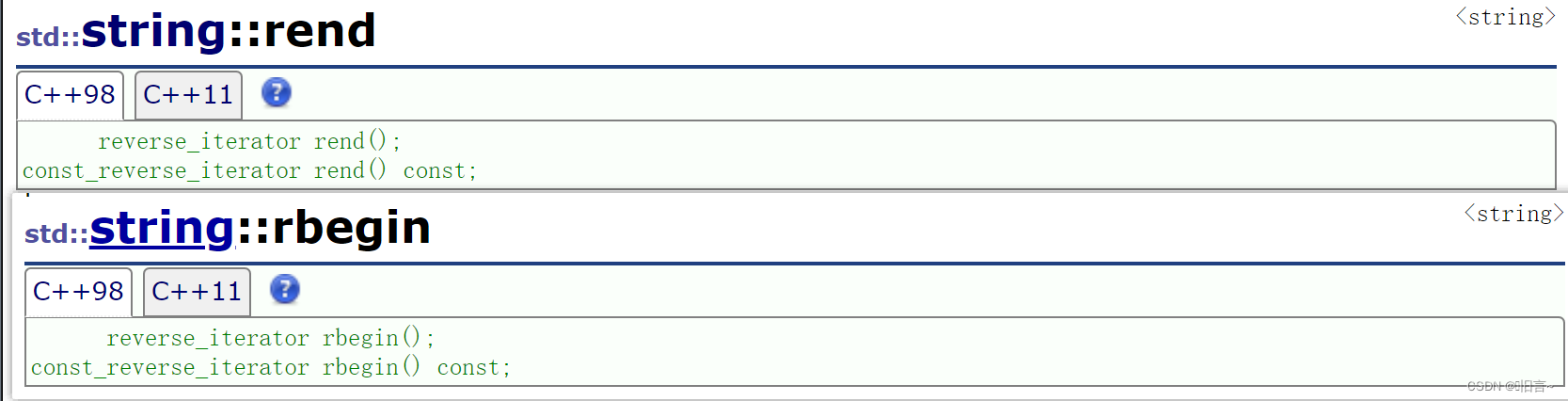
这里需要介绍一下rbegin()和rend()这两个函数,这两个函数是用来配合反向迭代器使用的。
- rbegin()函数返回的是string字符串的最后一个有效字符
- rend()函数返回的是string字符串的第一个字符的前一个位置。
咱们看看代码:
#include <iostream>
#include <string>using namespace std;int main()
{string s("hello world");string::reverse_iterator rit = s.rbegin();while (rit != s.rend()){cout << *rit;rit++;}cout << endl;return 0;
}
运行结果:

💫const修饰的迭代器
const修饰的迭代器是不可以改变的(只能读不能写)
咱们看看代码:
void Func(const string& s)
{string::const_iterator cit = s.begin();// 读操作while (cit != s.end()){cout << *cit;cit++;}cout << endl;// 不能进行写操作,会报错// cit = s.begin();// while (cit != s.end())// {// (*cit) += 1;// cout << *cit;// cit++;// }}🌙Capacity(容量)
学习这个板块还是比较简单的,也运用比较广泛的一个板块。

💫size和length
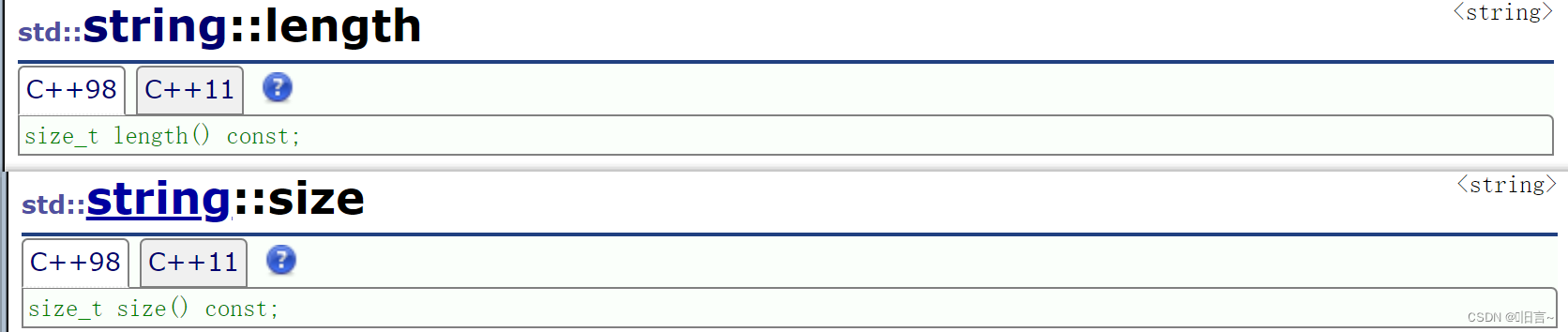
size函数和length函数本质上是一样的,都是计算元素总个数的。
咱们看看代码:
#include <iostream>
#include <string>using namespace std;int main ()
{string s("hello world");cout << s.size() << endl;cout << s.capacity() << endl;return 0;
}
运行结果:

- size是计算字符串的元素个数,除\0
- capacity是计算字符串的容量,也就是说定义一个string类是有初始容量的
💫reserve和resize
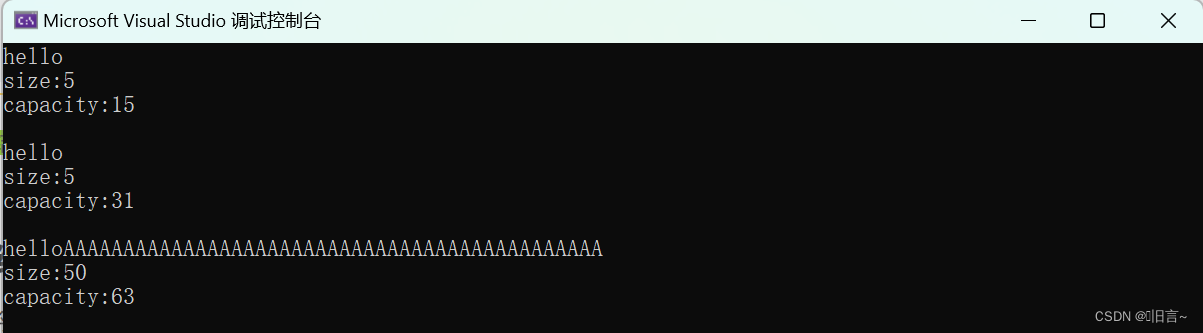
reserve函数是扩容函数,可以增大capacity的值,
resize其实也是扩容函数,但resize改变的是size的值,当size的值增大时自动触发string的扩容机制从而也增大了capacity的值
resize在增带size值的时候还会对没有字符的位置初始化,如果没有指定初始化内容就默认初始化为’\0’,而reserve不会进行初始化。

咱们看看代码:
#include <iostream>
#include <string>using namespace std;int main()
{string s("hello");cout << s << endl;cout << "size:" << s.size() << endl;cout << "capacity:" << s.capacity() << endl;cout << endl;s.reserve(25);cout << s << endl;cout << "size:" << s.size() << endl;cout << "capacity:" << s.capacity() << endl;cout << endl;s.resize(50, 'A');cout << s << endl;cout << "size:" << s.size() << endl;cout << "capacity:" << s.capacity() << endl;cout << endl;return 0;
}
运行结果:
💫max_size
max_size函数是计算字符串可以达到的最大长度。

咱们看看代码:
#include <iostream>
#include <string>using namespace std;int main()
{std::string str("Test string");std::cout << "size: " << str.size() << "\n";std::cout << "length: " << str.length() << "\n";std::cout << "capacity: " << str.capacity() << "\n";std::cout << "max_size: " << str.max_size() << "\n";return 0;
}
运行结果:

🌙Element access(元素访问)
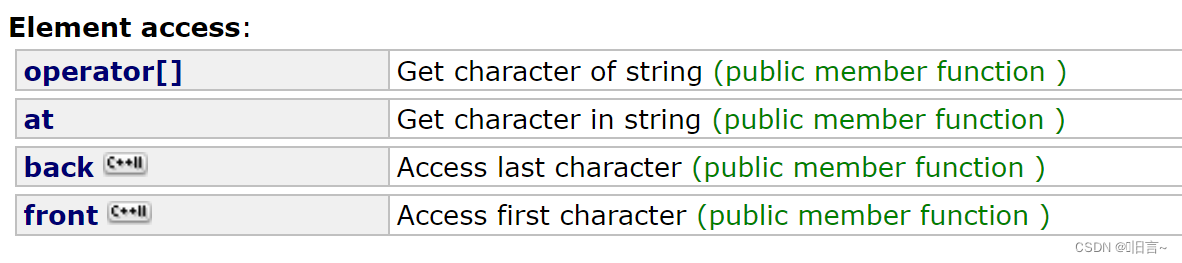
这个板块做为了解,知道有就行了😇😇。
💫at函数
返回对字符串中位置pos处的字符的引用。本质上还是一种遍历。

咱们看看代码:
#include <iostream>
#include <string>int main()
{std::string str("Test string");for (unsigned i = 0; i < str.length(); ++i){std::cout << str.at(i);}return 0;
}
运行结果:

这里捏还有很多函数就不再细讲咯,有兴趣老铁们翻翻看看。
🌙Modifiers(修改器)
这个接口重重重重点,这里会讲解插入删除.....🤪🤪🤪🤪
💫operator+=插入操作
这种操作本质上是一种赋值运算重载,用起来真的爽,它不仅可以插入新的string对象,还可以插入常量字符串,也可以插入单个字符,我们平时使用最多的方式也是这个方式。

咱们看看代码:
#include <iostream>
#include <string>using namespace std;int main()
{string s("hello ");// 插入常量字符串s += "world"; cout << s << endl;string str("world");// 插入新的string对象s += str; cout << s << endl;// 插入单个字符s += 'A';cout << s << endl;return 0;
}
运行结果:

💫append插入操作
它可以插入字符串,可以插入另一个string对象,而且可以指定n个字符插入,非常多样化。
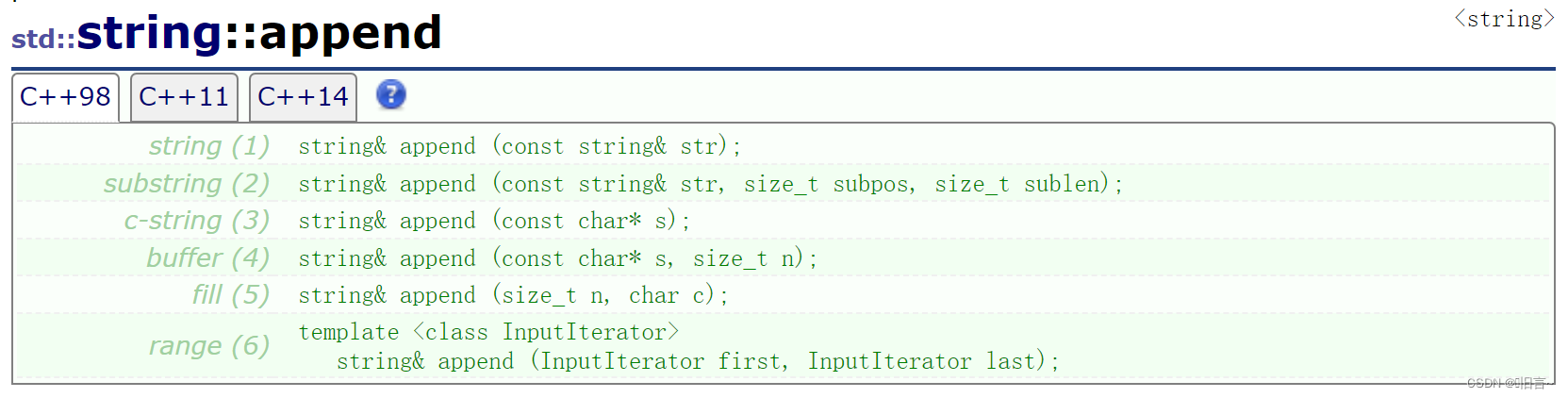
咱们看看代码:
#include <iostream>
#include <string>using namespace std;int main()
{string s("hello ");// 插入常量字符串s.append("world");cout << s << endl;string str("world");// 插入另一个string对象s.append(str);cout << s << endl;return 0;
}
运行结果:

💫push_back插入操作
将字符c追加到字符串的末尾,使其长度增加一,也就是说push_back函数只能够尾插入一个字符,不能插入字符串。

咱们看看代码:
#include <iostream>
#include <string>using namespace std;int main()
{string s("hello ");// 插入一个字符s.push_back('C');cout << s << endl;return 0;
}
运行结果:

💫insert插入操作
insert函数可以在任意的指定位置进行插入。
它可以在任意的指定位置
- 插入一个新的string对象
- 一个常量字符串
- 一个常量字符串的n个字符
- 一个字符
- 等等....
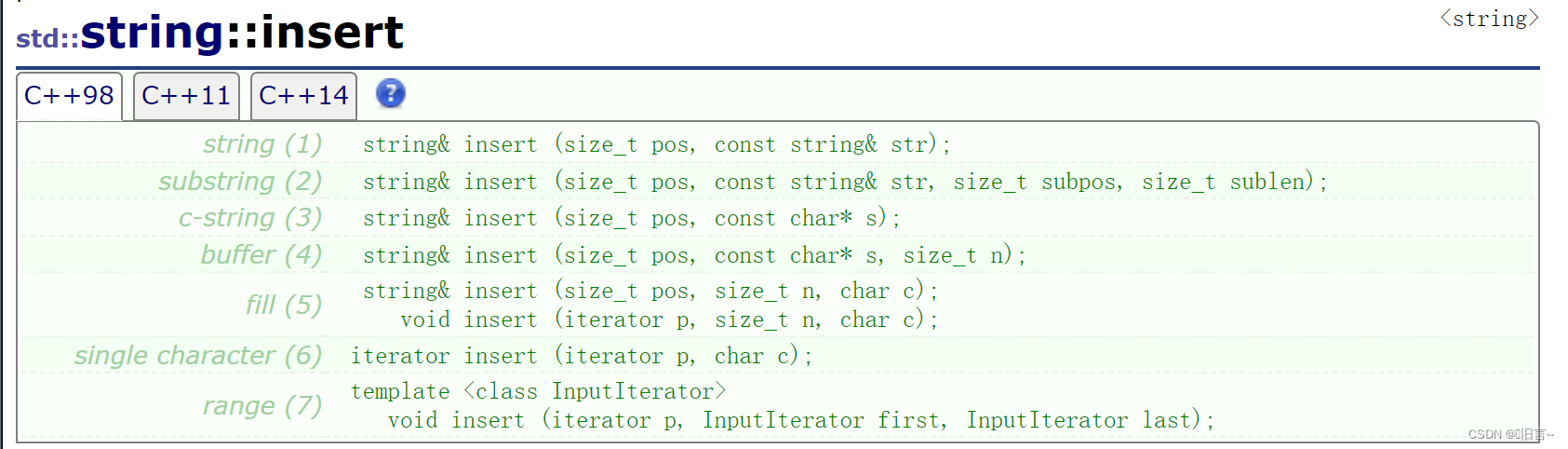
咱们看看代码:
#include <iostream>
#include <string>using namespace std;int main()
{string s("hello");// 在下标为0的位置插入一个新的string对象string str("hello world");s.insert(0, str);cout << s << endl;// 在下标为0的位置插入一个常量字符串s.insert(0, "hello world");cout << s << endl;// 在下标为0的位置插入一个常量字符串的前3个字符s.insert(0, "hello world", 3);cout << s << endl;// 在下标为0的位置插入一个字符xs.insert(0, 1, 'x');s.insert(s.begin(), 'x');cout << s << endl;// 在下标为0的位置插入三个字符xs.insert(0, 3, 'x');cout << s << endl;return 0;
}
运行结果:

💫erase删除操作
擦除字符串的一部分,缩短其长度,本质上erase函数删除任意指定位置的n个字符

咱们看看代码:
#include <iostream>
#include <string>using namespace std;int main()
{string s("hello world");// 删除下标为3位置的一个字符s.erase(3, 1);cout << s << endl;// 删除以下标为3位置为起点的3个字符s.erase(3, 3);cout << s << endl;// 删除以下标为3位置为起点往后的所有字符s.erase(3);cout << s << endl;return 0;
}
运行结果:

💫pop_back删除操作
擦除字符串的最后一个字符,有效地将其长度减少一个,本质上可以实现string对象的尾删操作。

咱们看看代码:
#include <iostream>
#include <string>using namespace std;int main()
{string s("hello world");s.pop_back();cout << s << endl;return 0;
}
运行结果:

💫swap交换操作
实现两个对象之间的交换。

咱们看看代码:
#include <iostream>
#include <string>using namespace std;int main()
{string s1("hello world");string s2("string");s1.swap(s2);cout << s1 << endl;cout << s2 << endl;return 0;
}
运行结果:

🌙String operations (字符串操作)
这个板块主要讲解的是,字符串的查找呀,返回值。在许多的题中都运用这块知识,望大家好好体会叭🫣🫣🫣。

💫c_str返回值
返回一个指向数组的指针,该数组包含一个以null结尾的字符序列(即C字符串),咱们可以用这个函数实现返回string对象对应的char * 指针

咱们看看代码:
//将string对象的内容通过strcpy函数拷贝到字符数组当中
#include <iostream>
#include <string>
#include <cstring>using namespace std;int main()
{string str("hello world");char* cstr = new char[str.size() + 1];strcpy(cstr, str.c_str());cout << cstr << endl;return 0;
}
运行结果:

💫find查找
查找string对象、常量字符串或者是一个字符,并且可以设定pos值来规定查找的起始位置,默认从0下标开始查找。

咱们看看代码:
// string::find
#include <iostream>       // std::cout
#include <string>         // std::stringint main()
{std::string str("There are two needles in this haystack with needles.");std::string str2("needle");// different member versions of find in the same order as above:std::size_t found = str.find(str2);if (found != std::string::npos)std::cout << "first 'needle' found at: " << found << '\n';found = str.find("needles are small", found + 1, 6);if (found != std::string::npos)std::cout << "second 'needle' found at: " << found << '\n';found = str.find("haystack");if (found != std::string::npos)std::cout << "'haystack' also found at: " << found << '\n';found = str.find('.');if (found != std::string::npos)std::cout << "Period found at: " << found << '\n';// let's replace the first needle:str.replace(str.find(str2), str2.length(), "preposition");std::cout << str << '\n';return 0;
}
运行结果:

💫find查找
rfind是倒着查找。find函数和rfind函数的区别就是查找方向不同。

这里就不再上代码咯。
💫substr
返回string字符串的一个任意子串

咱们看看代码:
#include <iostream>
#include <string>using namespace std;int main()
{string s1("hello world");// 取出子串"world"string s2 = s1.substr(6, 5);cout << s2 << endl;return 0;
}
运行结果:

到这里还有很多函数没有介绍:
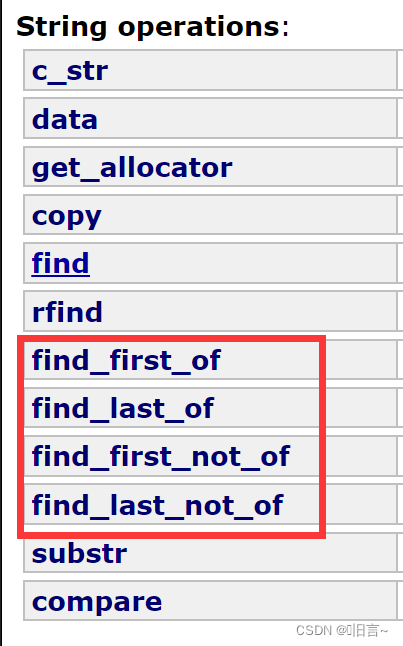
可以去看看官网中它们的使用方法。
🌟结束语
今天内容就到这里啦,时间过得很快,大家沉下心来好好学习,会有一定的收获的,大家多多坚持,嘻嘻,成功路上注定孤独,因为坚持的人不多。那请大家举起自己的小说手给博主一键三连,有你们的支持是我最大的动力💞💞💞,回见。
