07-2-接口文档管理工具-swagger注解使用__ev

swagger参考demo
package com.example.swagger2.controller;import com.example.swagger2.exception.SwaggerException;
import com.example.swagger2.model.User;
import io.swagger.annotations.*;
import org.springframework.web.bind.annotation.*;import java.util.HashMap;
import java.util.Map;@Api(tags = "接口服务", value = "/api/v1/swagger/**")
@RestController
@RequestMapping("/api/v1/swagger")
public class ApiController {@ApiOperation("保存用户信息")@ApiImplicitParams({@ApiImplicitParam(name = "name", value = "名字", required = true, paramType = "path"),@ApiImplicitParam(name = "age", dataType = "int", value = "年龄", required = true, paramType = "query")})@PostMapping("/{name}")@ResponseBodypublic Boolean save(@PathVariable("name") String name,@RequestParam("age") Integer age) {userInfo.put(name, new User(name, age));return true;}@ApiOperation("查询年龄")@ApiImplicitParams({@ApiImplicitParam(name = "name", value = "名字", required = true, paramType = "path")})@ApiResponses({@ApiResponse(code = 404, message = "用户不存在", response = SwaggerException.class)})@GetMapping("/{name}")@ResponseBodypublic User get(@PathVariable("name") String name) throws SwaggerException {if (!userInfo.containsKey(name)) {throw new SwaggerException(name + "不存在!");}return userInfo.get(name);}public static Map<String, User> userInfo = new HashMap<>(16);
}
package com.example.swagger2.model;import io.swagger.annotations.ApiModel;
import io.swagger.annotations.ApiModelProperty;
import lombok.AllArgsConstructor;
import lombok.Data;@Data
@AllArgsConstructor
@ApiModel(description = "用户信息")
public class User {@ApiModelProperty(value = "姓名")String name;@ApiModelProperty(value = "年龄")Integer age;
}
-
swagger相关注解介绍
注解 位置 说明 @Api 类 加载Controller类上,表示对类的说明 @ApiModel 类(通常是实体类) 描述实体类的作用,通常表示接口接收参数的实体对象 @ApiModelProperty 属性 描述实体类的属性,(用对象接收参数时,描述对象的一个字段) @ApiOperation 方法 说明方法的用途、作用 @ApiImplicitParams 方法 表示一组参数说明 @ApiImplicitParam 方法 用在@ApiImplicitParams注解中,指定一个请求参数的各个方面的属性 @ApiParam 方法入参或者方法之上 单个参数的描述信息,描述form表单、url参数 @ApiImplicitParam注解详解:
属性 取值 作用 paramType 查询参数类型 path 以地址的形式(rest风格)提交数据 query 直接跟参数完成自动映射赋值(/add/user?name=zhangsan) body 以流的形式提交 仅支持POST header 参数在request headers 里边提交 form 以form表单的形式提交 仅支持POST dataType 参数的数据类型 只作为标志说明,并没有实际验证 Long String name 接收参数名(方法入参的名称) value 接收参数的意义描述(描述信息) required 参数是否必填 true 必填 false 非必填 defaultValue 默认值
其它注解:
@ApiResponse:HTTP响应其中1个描述
@ApiResponses:HTTP响应整体描述
@ApiIgnore:使用该注解忽略这个API
@ApiError :发生错误返回的信息
把注解应用到项目中
package com.itheima.stock.controller;import com.itheima.stock.pojo.entity.SysUser;
import com.itheima.stock.service.UserService;
import com.itheima.stock.vo.req.LoginReqVo;
import com.itheima.stock.vo.resp.LoginRespVo;
import com.itheima.stock.vo.resp.R;
import io.swagger.annotations.Api;
import io.swagger.annotations.ApiImplicitParam;
import io.swagger.annotations.ApiOperation;
import org.springframework.beans.factory.annotation.Autowired;
import org.springframework.web.bind.annotation.*;import java.util.Map;
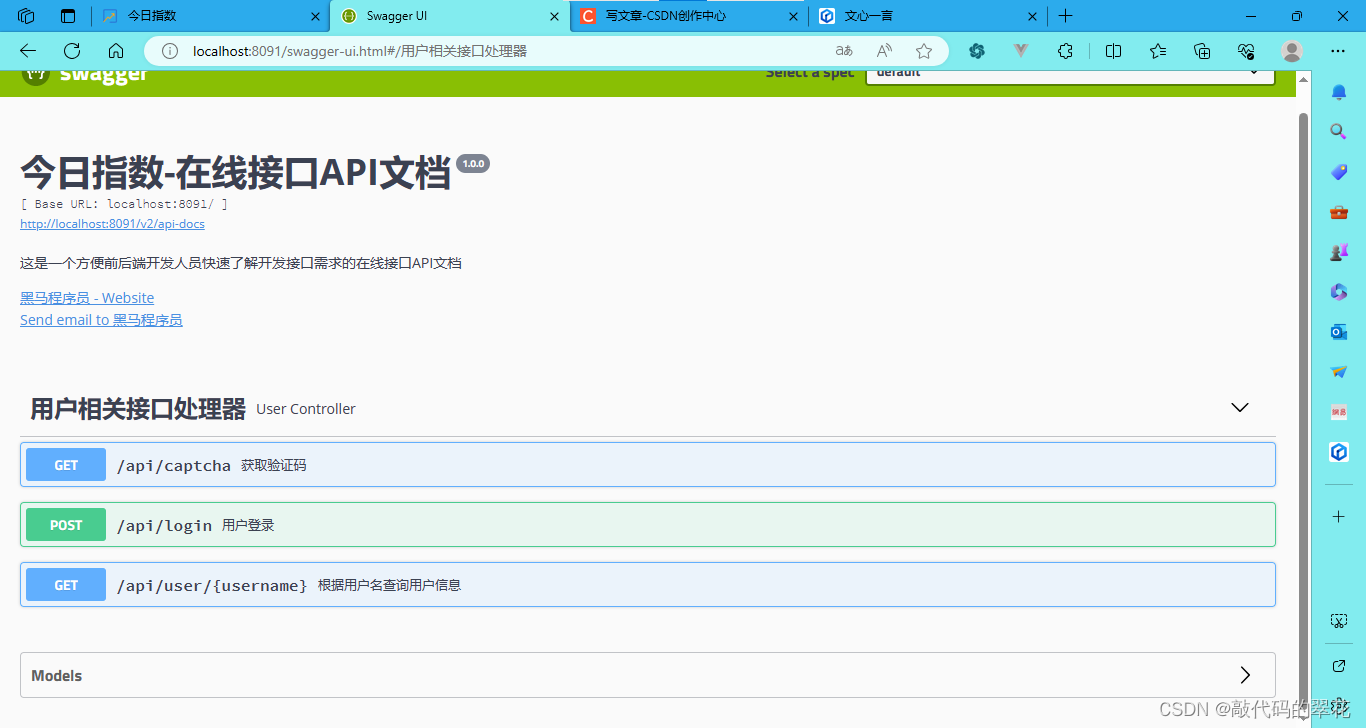
@Api(tags = "用户相关接口处理器")
@RestController
@RequestMapping("/api")
public class UserController {@Autowiredprivate UserService userService;
@ApiOperation(value = "根据用户名查询用户信息")
@ApiImplicitParam(name = "username", value = "用户名", required = true, paramType = "path")@GetMapping("/user/{username}")public SysUser findUserInfoByUsername(@PathVariable("username") String username) {return userService.findUserInfoByUsername(username);}
@ApiOperation(value = "用户登录")@PostMapping("/login")public R<R<LoginRespVo>> login(@RequestBody LoginReqVo loginReqVo) {return R.ok(userService.login(loginReqVo));}@ApiOperation(value = "获取验证码")@GetMapping("/captcha")public R<Map> getCaptchaCode() {return userService.getCaptchaCode();}
}
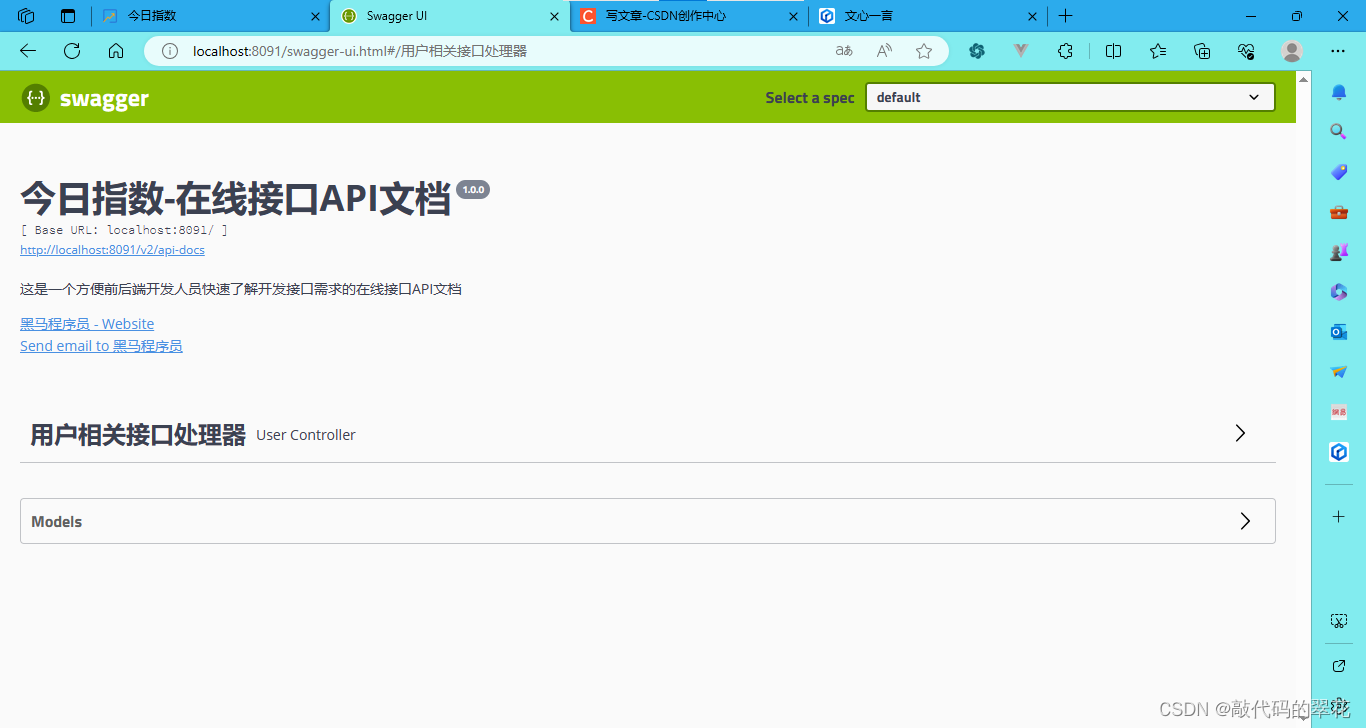
查看效果